The skyline of Johor Bahru is transforming at an unprecedented pace. As we navigate through 2026, the local property market is witnessing a massive surge in the handover of new, high-rise residential developments. From the bustling commercial hubs of Mount Austin and Medini to the scenic coastal views of Danga Bay and Princess Cove, thousands of Malaysians and expatriates are receiving the keys to their new condominiums. However, this modern urban lifestyle comes with a distinct architectural compromise: the shrinking floor plan.
Contemporary condominium layouts often feature compact second bedrooms, tight studio configurations, or multi-purpose utility rooms designed to maximize developer yield. For new homeowners, this presents an immediate and pressing interior design challenge. How do you furnish a 100-square-foot spare room to serve as a functional home office during the day, a cozy reading nook in the evening, and a comfortable guest suite during the holidays?
This space-saving dilemma almost always leads to a classic furniture debate: should you buy a daybed or a traditional twin bed? At first glance, they might seem interchangeable. However, their structural design, visual weight, and functional utility are vastly different. In this comprehensive guide, we will break down the exact dimensional differences, spatial efficiency, and lifestyle benefits of both options so you can make the smartest investment for your Johor apartment.
The Core Dimension Question: Are They the Same Size?
Before diving into the interior design and space-planning aspects, we must address the most common, evergreen question that puzzles furniture buyers: is a daybed the same size as a twin bed? The short answer is yes, functionally speaking, but the structural footprint tells a different story.
In Malaysia, a standard single (or twin) mattress typically measures 91 cm in width and 190 cm in length (approximately 36 inches by 75 inches). Both a traditional twin bed frame and a standard daybed are designed to accommodate this exact mattress size. This is fantastic news for homeowners, as it means you do not need to hunt for specialized, expensive, or custom-sized bed linens, fitted sheets, or mattress protectors. Standard single-size bedding will perfectly fit both setups.
However, the similarities end at the mattress. The overall exterior footprint of the furniture piece—which dictates how much of your precious condo floor space it actually consumes—varies significantly between the two. A traditional twin bed is minimalist in its perimeter, often featuring just a headboard and a low-profile footboard. A daybed, conversely, is built with a backrest running along its entire length and two raised side panels (acting as armrests). This bulkier framing means a daybed will take up slightly more square footage and visual space than a simple twin bed frame, despite holding the exact same mattress.
Understanding the Traditional Twin Bed
A twin bed (or single bed) is the standard, time-tested solution for individual sleeping arrangements. Architecturally, it is designed with a very clear, singular purpose: sleep. It typically consists of a headboard placed against a wall, a minimalist frame, and occasionally a low footboard. The mattress is the focal point, designed to project out into the room perpendicularly from the wall.
For decades, this has been the go-to choice for children’s bedrooms and dedicated guest rooms across Malaysian households. Its straightforward design offers significant psychological and ergonomic benefits for sleep hygiene. Because there are no high sideboards or backrests restricting movement, a twin bed feels open, airy, and unrestrictive, making it exceptionally comfortable for nightly use.
The Pros of a Twin Bed in an Apartment:
- Low Visual Weight: Because it lacks a large backrest and high armrests, a twin bed does not visually dominate a small room. It allows natural light from condo windows to pass over it freely, making the room feel larger and less cluttered.
- Flexible Room Placement: A twin bed only requires one short end (the headboard) to be anchored against a wall. This gives you the flexibility to place it in the center of a wall, in a corner, or even floating in a larger room.
- Ease of Bed-Making: With open access on three sides, tucking in fitted sheets, changing heavy duvets, and flipping the mattress is a quick, hassle-free task.
The Cons of a Twin Bed in an Apartment:
- Single Functionality: A twin bed looks and functions explicitly like a bed. If you place one in your home office, the room instantly looks like a bedroom that happens to have a desk in it, which can disrupt the professional aesthetic of a workspace.
- Awkward for Seating: Without a sturdy backrest running along the long edge, a twin bed is highly uncomfortable for daytime lounging. Attempting to sit on it like a sofa requires leaning against a cold wall, which can damage your condo’s paint or wallpaper over time.
If you are furnishing a dedicated child’s room in your new Johor apartment, a twin bed is almost always the superior choice. It promotes better sleep posture, offers unrestricted movement for active sleepers, and allows you to easily fit bedside tables on either side.
Understanding the Modern Daybed
If the twin bed is a specialist, the daybed is the ultimate multi-tasker. A daybed is a hybrid piece of furniture designed to blur the lines between a comfortable sofa and a supportive bed. Its defining structural feature is a three-sided frame: it features a backrest that runs the entire length of the mattress, flanked by two side panels that act as armrests.
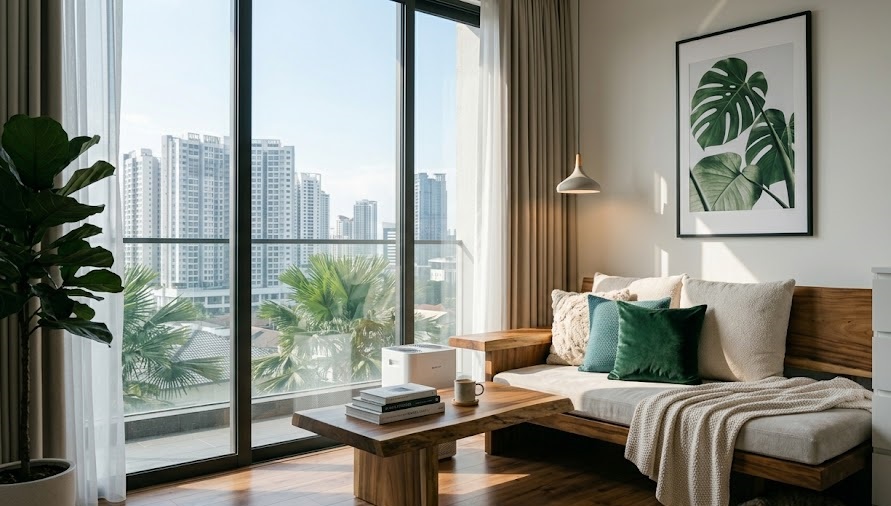
Unlike a traditional bed that extends perpendicular to a wall, a daybed is designed to be pushed entirely flush against a long wall. During the day, by adding a row of firm, decorative throw pillows along the backrest, the daybed visually and functionally transforms into a deep-seated sofa. At night, simply remove the decorative cushions, and you have a standard single-sized sleep surface ready for guests.
In the context of the 2026 Johor Bahru property market, where 2-bedroom condo units often utilize the second bedroom as a hybrid study and guest room, the daybed has become an incredibly sought-after piece of furniture. It allows a room to maintain a professional, sophisticated “lounge” or “office” appearance during the day, while secretly hiding a full-sized sleeping accommodation for when family visits from out of town.
The Pros of a Daybed in an Apartment:
- Dual-Purpose Efficiency: It provides comfortable, structured seating during the day and a genuine, supportive mattress for sleeping at night—eliminating the need to buy both a sofa and a bed for a tight space.
- Space-Saving Alignment: Because it sits horizontally flush against the wall, it creates a wide, open walkway in the center of the room, making it much easier to fit a study desk or bookshelf on the opposite wall.
- Trundle Integration: Many high-quality daybeds come with an optional roll-out trundle beneath the main frame. This allows you to store a second hidden mattress, instantly doubling your sleeping capacity without consuming any extra daily floor space.
The Cons of a Daybed in an Apartment:
- Visual Bulk: The high backrest and side panels can make a daybed feel large and boxy. If placed directly under a window or in a very dark, cramped room, it can block light and make the space feel slightly claustrophobic.
- Restrictive Sleeping: For taller individuals or restless sleepers, the solid panels on three sides can feel confining, making it slightly less comfortable for everyday, long-term sleep compared to an open twin bed.
- Difficult to Make: Because the mattress is wedged tightly against three structural walls, tucking in bedsheets and changing linens can be frustrating and requires lifting the heavy mattress out of the frame.
The Hidden Superpower: Trundles and Storage Integration
When evaluating space-saving furniture for a compact Johor Bahru condo, we must look beyond the surface level of the mattress. One of the most significant advantages of a daybed over a traditional twin bed is its capacity for hidden, integrated utility. Because a daybed features a continuous, solid frame running along the back and sides, it inherently provides a sturdy structural housing underneath the main mattress area.
Many premium daybeds are specifically engineered to accommodate a roll-out trundle. A trundle is a secondary, low-profile bed frame set on caster wheels that slides effortlessly underneath the main daybed. When family members travel down from Kuala Lumpur or cross the causeway from Singapore for a long weekend, you can simply pull out the trundle to instantly create a second sleeping space. This means a room that functions as a single-occupancy home office during the week can comfortably sleep two adults over the weekend—without the need to upgrade to a costly three-bedroom apartment or clutter your living room with uncomfortable inflatable mattresses.
If you do not frequently host overnight guests, this under-bed cavity can alternatively be utilized for massive storage gains. Instead of a trundle mattress, many daybeds offer deep, integrated storage drawers. In a 900-square-foot high-rise where closet space is strictly limited, having two or three massive drawers built seamlessly into your seating area provides the perfect hidden compartment for bulky winter clothing, extra bed linens, luggage, or seasonal holiday decorations.
While traditional twin beds can also be purchased with under-bed storage or a trundle, the visual execution is often less refined. Because a twin bed lacks the solid front and side panels of a daybed, storage boxes or trundle frames are frequently left visible, creating a cluttered, unkempt appearance that detracts from a minimalist modern aesthetic.
Material Matters: Surviving Johor’s High-Rise Environment
In Malaysia’s tropical climate, the material of your furniture is just as important as its physical footprint. High-rise condominiums in Johor Bahru experience unique environmental factors: strong afternoon sunlight pouring through floor-to-ceiling glass, rapid temperature fluctuations from daily air conditioning use, and pervasive ambient humidity. When choosing between a daybed and a twin bed, the construction material will heavily dictate the lifespan, maintenance routine, and visual appeal of the piece.
Solid Wood Frames
Solid wood is the gold standard for both daybeds and twin beds. High-quality timbers like solid Acacia or Mindi wood offer exceptional structural rigidity, ensuring the frame does not squeak, warp, or wobble over time. A solid wood daybed brings a warm, organic, and highly sophisticated architectural element to a room. It transitions beautifully between acting as a formal sofa and a bed. However, wood frames carry a heavier visual weight, meaning you must measure your room carefully so it does not overwhelm the space. For long-term durability in a humid climate, kiln-dried solid wood is the ultimate investment.
Upholstered Frames
Upholstered beds—where the frame, headboard, and sideboards are wrapped in foam and fabric—are incredibly popular for their plush, luxurious appearance. An upholstered daybed creates the most convincing “sofa” aesthetic, making it a fantastic choice for a dedicated media room or home office. However, honesty is required regarding maintenance: in Johor’s climate, fabric upholstery acts as a sponge for dust mites, airborne moisture, and pet dander. If your condo has poor ventilation, an upholstered frame requires rigorous weekly vacuuming and periodic deep extraction cleaning to prevent musty odors.
Metal Frames
Metal frames offer the lowest visual bulk, making them an excellent choice for extremely tight studio apartments. A wrought-iron or powder-coated steel twin bed allows maximum light to flow through the room, keeping the space feeling airy and open. They are also highly resistant to tropical pests and humidity if properly coated. The downside? Metal frames can feel cold and industrial, and lower-quality variants are notorious for developing structural squeaks and rattles after a few years of daily use.
Side-by-Side Comparison: Daybed vs. Twin Bed
To summarize the functional and aesthetic differences, the following table breaks down how daybeds and twin beds perform across crucial lifestyle metrics in a Malaysian condominium environment.
| Evaluation Metric | The Modern Daybed | The Traditional Twin Bed |
|---|---|---|
| Footprint & Layout | Sits horizontally flush against a wall. Opens up central floor space. | Projects perpendicularly into the room. Requires open space on three sides. |
| Primary Function | Dual-purpose: Formal daytime seating and nighttime sleeping. | Single-purpose: Dedicated specifically for sleeping. |
| Comfort for Daily Sleep | Moderate. The three-sided enclosure can feel slightly restrictive for tall adults. | Excellent. Open sides allow for maximum breathability and freedom of movement. |
| Aesthetic Versatility | High. Easily disguises as a high-end sofa in an office or lounge setting. | Low. Unmistakably looks like bedroom furniture. |
| Bed-Making Difficulty | High. Tucking in sheets requires lifting the mattress out of the tight frame. | Low. Easy access to all edges makes changing linens a fast, simple task. |
| Hidden Storage / Trundle | Seamlessly hides trundle beds or large storage drawers behind a cohesive frame. | Can fit storage, but it is often visually exposed, creating a cluttered look. |
Room Layout Strategies for Compact JB Condos
Knowing the dimensional differences is only half the battle. Successfully integrating these pieces into your condo requires strategic space planning. If you are dealing with a typical 100-square-foot second bedroom in a new Johor development, consider these architectural layout rules to maximize your usable space:
Strategy 1: The Hybrid Home Office (Best for Daybeds)
If you work from home, the spare room must prioritize professionalism. Place a solid wood daybed horizontally against the longest, unbroken wall in the room. Directly opposite the daybed, install a slim, floating study desk. This layout creates a wide, unobstructed central walkway. During video calls, the daybed in the background looks like an elegant, purposeful seating area rather than an unmade bed. Add an oversized area rug to anchor the space and establish it as a distinct “lounge” zone.
Strategy 2: The Dedicated Child’s Room (Best for Twin Beds)
If the room is intended for daily use by a child or teenager, prioritize sleep hygiene over daytime aesthetics. Place a twin bed with the headboard against a corner wall, but leave the long side exposed. This allows the child to easily climb in and out, prevents the claustrophobic feeling of being boxed in, and makes morning chores (like making the bed) much easier. Utilize the remaining wall space for a vertical wardrobe or a dedicated homework station.
Strategy 3: The Multi-Functional Studio (Best for Trundle Daybeds)
In a studio apartment where your living room is also your bedroom, a daybed is non-negotiable. Push the daybed into a corner, utilizing both the back wall and side wall to act as a natural supportive nook. Use high-density, tailored cushions to create a firm sofa backrest. Above the daybed, install vertical floating shelves to draw the eye upward, making the low ceiling feel taller. By hiding a trundle underneath, you preserve maximum daytime floor space for activities, dining, or exercise.
The Final Verdict: Which Should You Choose?
Ultimately, the choice between a daybed and a twin bed does not come down to the mattress size—they both securely hold a standard 91cm x 190cm single mattress. The decision hinges entirely on how you intend to *use* the room during your waking hours.
You should buy a Twin Bed if:
- The room is a dedicated, full-time bedroom for a child, teenager, or single adult.
- You want to maximize nighttime sleep comfort with an airy, unrestrictive layout.
- You prefer a minimalist aesthetic with low visual bulk.
- You want the ease of quickly changing heavy bed linens and making the bed daily without struggling against heavy side panels.
You should buy a Daybed if:
- You are furnishing a hybrid space, such as a home office, a reading den, or a media room that only occasionally hosts overnight guests.
- You need comfortable, structured seating during the daytime that does not ruin the professional aesthetic of the room.
- You are trying to maximize central floor space by keeping all furniture pushed flush against the walls.
- You desperately need the seamless, hidden integration of a pull-out trundle bed or massive storage drawers to handle a small floor plan.
In the rapidly evolving landscape of Johor Bahru real estate, flexibility is the ultimate luxury. As square footage becomes more premium, furniture that can effortlessly multitask without sacrificing style is the smartest investment a homeowner can make.
Whether you have decided on the multi-functional elegance of a daybed or the classic comfort of a traditional twin bed, the foundation of a great room starts with a high-quality frame. Do not settle for flimsy construction that won’t survive the tropical humidity. We invite you to explore our premium bed frame collection, featuring expertly crafted solid wood designs tailored to maximize space, durability, and style in your modern Malaysian home.