For decades, setting up a home meant embarking on a predictable rite of passage: flipping through glossy design catalogs, measuring pristine spaces, and purchasing coordinated sets from high-end modern retail brands. In the mid-market and premium household tiers, names like Crate & Barrel have long stood as symbols of sophisticated, contemporary living. But as we navigate the design landscape of 2026, a fundamental shift is occurring. Homeowners, collectors, and design purveyors are experiencing a collective fatigue toward mass-produced luxury. A growing appreciation for historical narrative, structural permanence, and environmental sustainability is driving people to look backward rather than forward.
In locations with deep historic roots like Jelutong, Penang, or the conservation districts of Malacca, this shift is more than just an aesthetic trend; it is a philosophy of living. As heritage shophouses and historic bungalows are painstakingly restored, the clash between modern design and historical integrity becomes obvious. Homeowners are increasingly faced with a critical choice: do you invest in premium, contemporary retail furniture that looks flawless on day one, or do you seek out solid, aged hardwoods that carry centuries of history? More importantly, when it comes to the cold, hard numbers of asset depreciation, which of these two paths actually protects your hard-earned ringgit?
The Modern Luxury Retail Reality: Is Crate & Barrel Worth It?
When standing inside a meticulously curated Crate & Barrel showroom, it is easy to see the appeal. The clean lines of mid-century modern credenzas, the soft textures of performance-fabric sofas, and the bright, aspirational aesthetic speak directly to the desire for a beautiful, organized life. The brand positions itself as a premier destination for high-quality, contemporary furniture. However, as prices have scaled upward, consumers are forced to critically evaluate their purchases. It begs the fundamental question: is Crate & Barrel furniture worth it when viewed through the cold lens of long-term financial value?
To answer this, we must separate the immediate aesthetic utility of the furniture from its life cycle as an asset. When you buy a modern sofa or table from a retail store, you are paying for several things that have absolutely nothing to do with the raw materials of the item. You are paying for global supply chain logistics, prime retail real estate leases, heavy multi-channel marketing campaigns, and design development overheads. The moment the delivery truck unloads the piece into your home, those intangible costs vanish from the valuation equation. Much like a brand-new car driven off the dealership lot, the market value of mass-premium furniture experiences an immediate, sharp drop. In the secondhand market, a contemporary piece typically retains only 20% to 40% of its retail price within the first few years of ownership, regardless of how pristine its condition might be.
This reality is particularly jarring for homeowners who believe that premium prices automatically guarantee heirloom-quality construction. While Crate & Barrel certainly crafts furniture that is vastly superior to budget flat-pack alternatives, it is still bound by the constraints of modern commercial manufacturing. Many of their highly sought-after wood tables and media consoles feature engineered wood cores finished with thin wood veneers. While structurally stable, these items do not possess the organic, repairable characteristics of solid timber. Once a veneer is deeply chipped, water-damaged, or warped by regional humidity, repairing it to its original luster is an incredibly difficult—and often impossible—endeavor.
The Vintage Resurgence: Why Solid Antique Wood is Reclaiming the Home
While modern retail brands fight to keep pace with rapidly changing trend cycles, a quiet revolution is taking place in the secondary market. Interior designers, conservationists, and forward-thinking homeowners are looking past mass-manufactured luxury and embracing the timeless, sustainable allure of antique and vintage furniture. This trend is not merely driven by nostalgia; it is a calculated response to what many see as the declining structural integrity of contemporary consumer goods.
The term “antique” generally refers to furniture that is at least 100 years old, while “vintage” captures pieces from older eras that represent significant design movements. What sets these historical pieces apart from modern alternatives is their composition: they are almost universally built from solid, old-growth hardwoods. Before the dawn of industrial clear-cutting and fast-growing timber plantations, craftsmen had access to slow-growing, incredibly dense trees. Woods like teak, mahogany, rosewood, and oak were harvested at the peak of their maturity. These woods possess tight grain structures, natural oils, and a structural density that simply cannot be replicated by today’s commercial forestry practices.
Moreover, the construction of these pieces represents a level of craftsmanship that has become financially unfeasible in modern mass production. Dovetail joints, mortise-and-tenon framing, and hand-carved details were not decorative afterthoughts; they were structural standards. Because these pieces are crafted entirely from solid wood, they hold an intrinsic resilience. If an antique teak dining table suffers a scratch, a stain, or minor water damage in Penang’s humid climate, it does not mean the end of its life. A skilled restorer—or even an ambitious DIY enthusiast—can sand down the surface, nourish the grain with natural oils, and restore the piece to its original glory. This cycle of restoration and preservation means that solid antiques do not have an expiration date. Instead of depreciating, their scarcity and historical value ensure that they hold—and frequently increase—their market value over time.
The transition from modern retail furniture to vintage solid wood is fueled by three major factors:
- Unmatched Density: Old-growth timber possesses a structural density and natural oil content that protects it from warping in high-humidity climates.
- True Sustainability: Reusing historical furniture prevents deforestation, avoids the chemical glues used in modern veneers, and bypasses massive manufacturing carbon footprints.
- Inherent Scarcity: Unlike a modern dining table that can be manufactured by the thousands, an authentic antique is a finite resource. As the supply of historic timber decreases, the value of surviving pieces naturally rises.
The Tropical Battleground: Wood Performance in High Humidity
For those living in Southeast Asia, particularly in high-humidity environments like Penang or Johor Bahru, furniture selection is not merely an aesthetic choice—it is a battle against the elements. The climate of Jelutong, characterized by consistent warmth and moisture, acts as an accelerator for material degradation. This is where the divide between modern engineered woods and historic solid woods becomes most apparent.
Modern premium furniture brands often utilize Medium-Density Fiberboard (MDF) or plywood cores enveloped in a thin veneer of real wood. MDF is incredibly uniform, which makes it ideal for achieving the perfectly flat, seamless surfaces demanded by minimalist, contemporary designs. However, MDF is essentially compressed wood fibers held together by synthetic resins and glues. When exposed to persistent, heavy humidity, these fibers act like a sponge. If moisture penetrates the protective veneer coating through a microscopic seam or scratch, the underlying MDF swells, compromising the entire structure. The veneer begins to bubble, lift, and eventually crack. Once this swelling occurs, the piece cannot be repaired; its structural integrity is permanently damaged, rendering it virtually worthless on both the primary and secondary markets.
In contrast, solid antique hardwoods have already spent a century or more acclimating to atmospheric shifts. Hardwoods like teak (Tectona grandis) contain high levels of natural silica and oils. These organic compounds act as a natural defense system against moisture, rot, fungi, and wood-boring insects. Because the wood is solid throughout, it expands and contracts uniformly in response to seasonal humidity shifts without splitting its joints. Even if an antique suffers surface moisture exposure, the damage remains superficial. The dense grain prevents deep penetration, allowing the wood to be dried, treated, and refinished without losing its form or strength. From a purely practical standpoint, solid antique wood is engineered by nature to survive climates that easily destroy modern, engineered counterparts.
The Financial Lifespan: A Cost-Per-Year Analysis
When analyzing whether premium furniture is a sound investment, we must look beyond the initial price tag. True value is calculated by dividing the purchase price by the number of years the asset remains functional and desirable. This is where the mathematical reality of modern retail depreciation becomes clear. To understand if is Crate & Barrel furniture worth it, we must compare its long-term financial trajectory against that of timeless, solid antique wood.
Consider a practical scenario. A homeowner purchases a contemporary Crate & Barrel dining table crafted from engineered wood with a premium oak veneer for RM 8,500. Under normal conditions, including the inevitable spills, light scratches, and exposure to humidity, this table will look pristine for about three to five years. By year seven, micro-fissures in the veneer may begin to show, and the contemporary style that seemed so fashionable at the time of purchase may start to look dated. If the owner decides to sell the table on the secondary market at this point, they will likely struggle to find a buyer willing to pay more than RM 1,500 to RM 2,000. The cost of ownership over those seven years amounts to roughly RM 900 to RM 1,000 per year, leaving the owner with a severely depreciated asset.
Now, let us contrast this with the acquisition of a solid, antique teak dining table sourced from a reputable collector of antique and vintage furniture. The purchase price for a high-quality, late-19th-century colonial teak table might be RM 7,000. Because this piece is constructed from old-growth timber and has already survived over a century of environmental shifts, its structural integrity is absolute. It does not go out of style; instead, its patina—the rich, glowing character developed by the wood over decades of use—deepens and becomes more attractive. After ten years of daily family meals, the table can be lightly sanded and oiled, restoring it to a beautiful state. If the owner chooses to sell it, the rarity of old-growth teak and the growing global demand for sustainable antiques ensure that the table will likely fetch at least its original purchase price, if not more due to inflation and scarcity. The net cost of ownership over a decade is effectively zero, or perhaps even positive. This is the financial magic of solid antique wood: it transitions from a depreciating household expense to a reliable store of value.
The Art of Joinery: Handcrafted vs. Automated Assembly
The secret behind the immense value retention of antique furniture lies in the construction methods utilized by artisans of previous eras. Before the industrialization of the furniture market and the rise of flat-pack convenience, furniture was assembled using techniques designed to last generations. These methods were born out of a deep respect for the natural behavior of timber.
Wood is an organic, living material. Even centuries after being harvested, it remains responsive to its environment. It “breathes,” expanding in humid conditions and contracting when the air is dry. Master craftsmen of the past understood this movement and developed joinery systems that allowed the wood to shift without self-destructing. Mortise-and-tenon joints, dovetails, and wooden pegging systems do not rely on rigid metal screws or chemical glues. Instead, they interlock the wood fibers in a way that distributes physical stress evenly across the entire frame. When the wood expands during Penang’s monsoon season, these joints adjust naturally, maintaining their structural strength without cracking.
In contrast, modern mass-market furniture production relies heavily on speed, standardization, and automation. Even high-end retail brands use rigid metal brackets, dowels, and industrial chemical adhesives to join panels of engineered wood or MDF. Metal and wood do not react to temperature and humidity in the same way. When a metal screw is anchored directly into a fiberboard core, the constant expansion and contraction of the surrounding wood fibers gradually strips the internal threads of the screw hole. Over time, the joints begin to wobble, the drawers sag, and the hinges pull away from the frame. Because fiberboard cannot be easily re-threaded or repaired once stripped, the structural integrity of the piece is permanently compromised. From a engineering perspective, modern automated construction is designed for a single lifespan, whereas traditional handcrafted joinery is built for centuries of continuous service.
The Sustainable Luxury of the Circular Economy
In 2026, the global conversation around luxury and interior design is heavily focused on environmental sustainability. Consumers are increasingly experiencing “greenwashing fatigue,” realizing that purchasing newly manufactured “eco-friendly” items still requires raw material extraction, chemical processing, and international shipping. This awareness is driving a major shift toward a circular design economy, where the greenest piece of furniture is the one that already exists.
The environmental footprint of purchasing a new, imported piece of modern retail furniture is substantial. Even if the timber is sourced from certified sustainable forests, the wood must be transported to processing plants, converted into engineered panels using synthetic resins, laminated with veneers, packaged in layers of protective synthetic materials, and shipped across oceans to reach retail showrooms. This entire supply chain contributes to carbon emissions, chemical pollution, and packaging waste.
Choosing vintage and antique solid wood, however, represents the absolute pinnacle of sustainable consumption. By purchasing a historical piece, you are effectively preserving resources and preventing high-quality timber from entering landfills. Furthermore, because antique furniture was finished using natural waxes, shellacs, and oils rather than the highly volatile organic compound (VOC) polyurethane varnishes common in modern manufacturing, these pieces do not off-gas harmful chemicals into your home. The cultural shift toward vintage style is not just an aesthetic preference; it is an ethical stance. In a world of finite resources, owning a beautifully preserved antique is a statement of sophisticated, eco-conscious luxury that modern retail simply cannot replicate.
| Comparison Metric | Crate & Barrel (Modern Premium) | Solid Antique Wood (Vintage Premium) |
|---|---|---|
| Primary Materials | Engineered wood, MDF, modern veneers, softwoods. | Old-growth teak, mahogany, rosewood, solid oak. |
| Joinery Technique | Industrial glues, metal brackets, dowels, cam screws. | Mortise-and-tenon, dovetail, wooden pegging. |
| Climate Resilience | Vulnerable to veneer peeling and MDF swelling in humidity. | Highly resistant; natural oils prevent moisture damage. |
| Repairability | Extremely difficult to repair deep gouges or swollen cores. | Easily sanded, refinished, and structurally restored. |
| 10-Year Value Trend | Depreciates significantly (retains ~15-25% of retail price). | Appreciates or holds steady (retains 100%+ of value). |
| Carbon Footprint | High (manufacturing, chemical treatments, transport). | Zero (reused, preserved, locally sourced). |
Case Study: Furnishing a Jelutong Heritage Shophouse
To see these principles in action, we can look at a practical case study from Jelutong, Penang, where historical preservation is an integral part of community life. In 2026, a local homeowner named Tan undertook the meticulous restoration of a heritage shophouse, aiming to blend historical architecture with a functional, luxurious interior. Tan faced a common dilemma: how to furnish the main living and dining spaces.
Initially, Tan was drawn to the sleek, minimalist aesthetic of premium modern retail, considering a complete living set from a luxury brand like Crate & Barrel. The clean lines and neutral tones promised to create a beautiful, contemporary contrast against the building’s historic brick walls and original terracotta floor tiles. However, upon reviewing the specifications, Tan realized that several of the pieces featured engineered wood cores and delicate veneers that would be vulnerable to the coastal, humid air of Penang, particularly since the shophouse was designed with open-air air wells and natural ventilation.
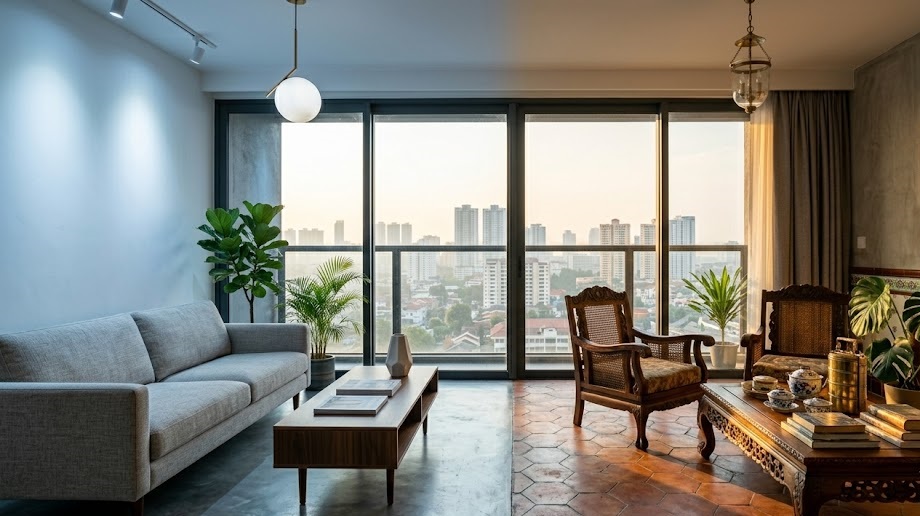
Instead of purchasing new retail items, Tan decided to invest in carefully selected pieces of Peranakan and colonial-era antique furniture, including a solid teak sideboard, a round marble-top dining table, and hand-carved armchairs. The results were remarkable. Not only did the warm, rich tones of the aged hardwoods complement the building’s architectural history, but the pieces also stood up effortlessly to the tropical climate. The natural oils in the antique teak protected the sideboard from the moist air flowing through the central courtyard, while the solid construction meant the dining table could handle daily use without a hint of instability. Aesthetically, the home felt grounded, authentic, and uniquely personal, avoiding the sterile, “catalog” look that often results from buying entire rooms from a single retail brand. From a financial perspective, Tan’s investment in vintage wood remains entirely secure, whereas a suite of modern veneer furniture would have begun its inevitable decline in value the moment it was unpacked.
The Liquid Capital: Resale Markets and Heritage Appraisals
A final, crucial aspect of value retention is market liquidity. If you ever find yourself needing to downsize, relocate, or adjust your interior design, how easily can you convert your furniture back into cash? This is where the stark contrast between modern retail and antique solid wood becomes incredibly clear.
Attempting to sell contemporary, second-hand furniture on popular online marketplaces like Carousell is often a frustrating experience. Because modern retail brands release new collections every season, older models quickly lose their appeal. Buyers on these platforms are looking for steep discounts, and you will likely have to mark your items down to a fraction of what you originally paid, regardless of their condition. The market for used modern furniture is highly saturated, and unless you are willing to sell at a significant loss, your pieces may sit unsold for months.
The market for high-quality antique and vintage furniture, however, operates under entirely different rules. Antiques are a finite, scarce resource. There is a robust, global network of collectors, dealers, and interior designers who are constantly searching for authentic, solid-wood pieces with verified provenance and exceptional craftsmanship. Because these items are no longer being manufactured, their supply is steadily decreasing over time, while demand continues to rise. A well-maintained antique sideboard or dining set is essentially liquid capital. If you choose to sell, you can often work directly with antique dealers, auction houses, or high-end vintage boutiques to find a buyer who understands the true worth of the piece. You are not selling “used furniture”; you are trading in a historical asset that retains its value across decades.
Conclusion: Choosing Quality That Transcends Generations
The contemporary designs offered by premium brands like Crate & Barrel will always have a place in modern interiors. They offer immediate aesthetic gratification, clean lines, and a sense of effortless luxury that appeals to our desire for modern, organized living. However, when we analyze the true costs of ownership—including material degradation, the high rate of retail depreciation, the vulnerability of engineered woods to tropical humidity, and the environmental impact of new manufacturing—the limits of modern consumerism become clear.
Investing in solid antique wood is a choice that transcends the simple act of home decoration. It is a commitment to timeless craftsmanship, environmental stewardship, and long-term financial security. By selecting pieces crafted from old-growth hardwoods, assembled with historic joinery techniques, and enriched with a natural patina, you are investing in assets that hold their value, survive the elements, and tell a rich, historical story. Your home becomes more than just a showcase for passing trends; it becomes a sanctuary of enduring quality, character, and sustainable luxury.
If you are ready to move past the cycle of disposable retail trends and elevate your living space with furniture that truly holds its worth, we invite you to explore our carefully curated collections. Discover the unparalleled beauty, structural integrity, and investment potential of authentic, historical pieces by visiting our specialized antique and vintage furniture gallery today. Reclaim the beauty of the past, and make an investment that your family will cherish for generations to come.