
As the rainy season sweeps across the southern tip of the Malay Peninsula, households in Johor Bahru face a familiar set of challenges. The prolonged monsoon humidity does more than just make the afternoon air feel heavy; it creates an ideal environment for pests to thrive. While municipal health alerts frequently remind us of dengue risks, another pest concern quietly escalates indoors: flea infestations. This is particularly true in dense residential estates across Mount Austin, Bukit Indah, and Taman Perling, where high concentrations of family pets and community animals can quickly spread these persistent insects.
When fleas enter a home, they do not confine themselves to your pets. They quickly seek harborages within your living space, with upholstered furniture being one of their primary targets. For homeowners dealing with an active infestation or those looking to proof their homes against future outbreaks, understanding how your furniture material interacts with pests is crucial. If you currently own or are considering purchasing leather upholstery, a fundamental question arises: can fleas live in leather furniture?
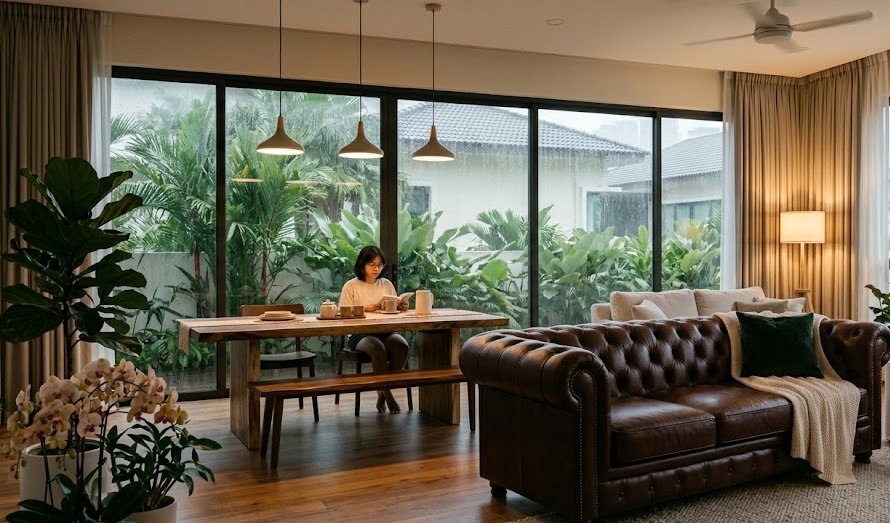
Unlike woven fabrics, which feature loose, breathable spaces where insects can hide and reproduce, leather possesses distinct physical properties. In this comprehensive guide, we will examine the biological needs of fleas, analyze how they interact with different upholstery materials, and outline actionable steps to keep your home comfortable, hygienic, and entirely pest-free during Johor’s damp seasons.
The Biology of a Flea Infestation in Upholstery
To understand why certain furniture materials attract pests, we must look at the lifecycle of the common cat flea (Ctenocephalides felis), the species responsible for nearly all flea-related household issues in Malaysia. Fleas do not spend their entire lives on your cat or dog. Adult fleas jump onto a host to feed, but their eggs are smooth and non-sticky. As your pet moves, sleeps, or rests on the sofa, flea eggs fall off into the surrounding environment.
Within a few days, these eggs hatch into microscopic, legless larvae. Unlike adult fleas, larvae are highly sensitive to light and dry air. They actively seek dark, warm, and humid crevices where they can feed on organic debris, such as shed pet dander and adult flea droppings (often called “flea dirt”). After a larval stage, they spin a silk cocoon and enter the pupal phase. This cocoon is incredibly durable, resistant to many standard household insecticides, and can remain dormant for several months until heat, carbon dioxide, or physical vibrations signal that a host is nearby.
Because Johor’s year-round climate keeps temperatures consistently warm (averaging 26°C to 32°C) and relative humidity high (frequently exceeding 75%), the entire flea lifecycle accelerates. A single female flea can lay up to 50 eggs per day, meaning a minor issue can quickly escalate into a widespread household problem if your furniture provides a favorable habitat.
Can Fleas Live in Leather Furniture?
To answer the primary question clearly: fleas cannot live directly on or within the smooth surface of genuine leather furniture. For a detailed breakdown of the physical and material science behind this barrier, exploring can fleas live in leather furniture explains why high-quality leather is one of the most hygienic options you can introduce to a pet-owning home.
The primary reason for this resistance is the cellular structure of processed hide. Genuine top-grain leather is non-porous and lacks the open, woven spaces found in fabrics like linen, cotton, velvet, or polyester blends. Because the surface is smooth, flea eggs cannot cling to it; instead, they slide off onto the floor, where they can be easily swept or vacuumed away. Furthermore, flea larvae require a dark, fibrous environment to burrow and hide from light. A flat, solid leather surface offers no such protection, leaving any hatched larvae fully exposed to dry indoor air and predators.
However, it is vital to differentiate between the surface of the leather and the construction of the furniture piece. While fleas cannot burrow into the leather itself, they may find temporary harborages in the structural areas of a leather sofa, such as:
- The seams, welting, and tufting crevices where dust, dander, and organic debris accumulate.
- The fabric lining underneath removable leather cushions.
- The cambric dust cover (the thin, dark fabric fabric stapled to the bottom underside of the sofa frame).
- The gap between the leather cushions and the internal wooden or metal frame.
Thus, while the leather upholstery itself remains highly resistant and easy to sanitize, a dirty or neglected leather sofa can still harbor pests within its deep, uncleaned joints. This highlights the importance of choosing a well-constructed furniture piece and maintaining a regular cleaning routine.
Not all leather-like materials perform the same. While high-quality genuine leather and premium polyurethane (PU) faux leathers are smooth and pest-resistant, cheaper bonded leathers or split-leather blends can peel and crack over time due to humidity. These surface cracks create micro-crevices where skin flakes, dust, and flea eggs can settle, diminishing the material’s natural pest-resistant advantages.
How Fabric Furniture Exacerbates Household Infestations
To understand the protective value of leather, it is helpful to look at how woven fabrics behave when exposed to household pests. Materials like chenille, tweed, velvet, and microfiber are composed of millions of tiny, interconnected synthetic or natural fibers. This structure makes fabric sofas highly breathable, but it also makes them a highly vulnerable environment for pests.
When a pet carrying fleas rests on a fabric sofa, their movements shake eggs deep into the weave of the fabric. Once inside, these eggs are shielded from direct sunlight and the physical suction of standard vacuum cleaners. As the eggs hatch, the larvae burrow deep into the cushion filling, where they feed on trapped pet dander, hair, and dust. This creates a secure environment for them to spin cocoons and enter the pupal stage, undisturbed by topical flea sprays or surface cleaning.
During Johor’s high-humidity periods, these fabric fibers also absorb ambient moisture from the air, creating a humid microclimate deep within the cushions. This moisture acceleration can cause a flea cycle to complete in as little as two weeks, making fabric furniture a major contributor to persistent, recurring infestations that seem to defy standard pest control treatments.
Now, please type generate phase 2 to continue with the next phase of the guide, where I will detail the practical sanitation steps, present the maintenance table, outline 2026 pest prevention tips, and close with the final call to action.
Step-by-Step Leather Sanitization Protocol for Pest Incidents
If you suspect that your pet has introduced fleas into your home during a seasonal pest alert, do not panic. Because your primary seating is upholstered in leather, you hold a massive advantage in the fight against household infestations. While sanitizing a fabric sofa might require expensive deep steam cleaning, heavy chemical pest sprays, or even discarding the cushions entirely, sanitizing a leather furniture piece is a highly straightforward, logical process. By following this detailed, step-by-step cleaning protocol, you can permanently eliminate any hiding fleas, eggs, or larvae without damaging your premium upholstery.
Step 1: Systematic HEPA Vacuuming
The absolute first and most critical line of defense is a thorough vacuuming of the entire furniture piece using a vacuum equipped with a HEPA filter. Although fleas cannot penetrate the smooth leather surface, their microscopic eggs and larvae will seek refuge in the structural crevices where dust settles.
- Dismantle the Sofa: Remove all loose cushions, throw pillows, and blankets from the sofa frame. Wash any fabric accessories immediately in hot water (at least 60°C) to kill hidden eggs.
- Target the Crevices: Using the narrow crevice tool attachment on your vacuum cleaner, systematically clean along all seams, piping, tufting buttons, and corners. Pay extra attention to the deep gaps where the seat cushions rest against the backrest and armrests.
- Clean the Decking: Vacuum the fabric lining underneath the leather cushions (known as the deck fabric) and the bottom dust cover of the frame. This is the only breathable material on a leather sofa, making it a prime target for larvae.
- Crucial Safety Action: Once completed, do not leave the vacuum inside your house. Immediately empty the vacuum canister or throw away the vacuum bag into a sealed, airtight plastic bag outside your home. In Malaysia’s warm climate, fleas can easily hatch inside a vacuum canister and crawl back out into your living room.
Step 2: Wipe Down and Sanitize the Leather Surface
Next, you must clean the leather surface to remove any micro-debris, dust, or residual pet dander that could serve as a food source for developing flea larvae. Larvae feed heavily on organic matter, so a pristine surface disrupts their lifecycle.
- Prepare a Gentle Solution: Mix a mild solution of warm water and a few drops of pH-neutral liquid soap, or ideally, a specialized pH-balanced leather cleaner. Strictly avoid using harsh chemical disinfectants, rubbing alcohol, bleach, or standard household surface cleaners, as these will permanently strip the protective finish of the leather, leading to drying, cracking, and peeling.
- Damp Wipe: Dampen a clean, lint-free microfibre cloth with the solution. Ensure the cloth is only slightly damp, not dripping wet, as excessive water can seep into the structural seams and saturate the internal padding, which encourages mold growth in Johor’s humid environment.
- Methodical Cleaning: Wipe down every square inch of the leather surface, working in gentle circular motions. Focus heavily on the creases along the piping and structural seams where oils and dirt accumulate.
- Immediate Drying: Follow up immediately with a second dry, clean microfibre cloth to remove any residual moisture, leaving the leather surface completely clean, dry, and hostile to pests.
Step 3: Handle the Undercarriage and Fabric Linings
The hidden fabric elements of a leather sofa are where fleas are most likely to seek long-term shelter. Treating these structural areas is critical for completely breaking the pest lifecycle and ensuring they do not return.
- Inspect the Cambric: Carefully lay the sofa on its back to inspect the thin, black fabric cover (cambric) stapled to the underside of the wooden frame.
- Apply Desiccants: If you find signs of pest activity or want to take preventative measures, apply a light, even dusting of food-grade diatomaceous earth (DE) to the underside fabric and inside the structural cavity of the sofa. Diatomaceous earth is a natural, highly effective, non-toxic mineral powder. Microscopically, it is incredibly sharp and damages the waxy protective exoskeleton of insects, causing them to safely dehydrate and die within a few days without the use of toxic fumes.
- Cleanup: Leave the powder in place undisturbed for 48 to 72 hours, then vacuum it up thoroughly using a soft brush attachment.
Step 4: Restore, Condition, and Protect
Pest treatments, aggressive environmental humidity shifts, and thorough cleanings can deplete the natural moisture, tannins, and essential oils within genuine leather. To maintain its supple texture and natural resilience, you must replenish these compounds.
- Apply Conditioner: Once the furniture is completely clean and dry, apply a high-quality, leather-safe cream conditioner.
- Even Distribution: Spread the conditioner evenly across the surface using a soft sponge or applicator pad, allowing the leather to absorb the nutrients for about 30 minutes.
- Final Buffing: Buff the surface vigorously with a dry microfibre cloth to restore its rich luster. This process effectively seals the microscopic pores of the hide, strengthening its natural barrier against future moisture penetration and rendering the surface far too slippery for pests to navigate.
Understanding Leather Grades and Their Pest-Resistant Qualities
It is important to acknowledge that the pest-resistant qualities of a sofa depend entirely on the specific grade and quality of the leather used in its construction. Not all leather is created equal, and cheaper alternatives can inadvertently create the very pest issues you are trying to avoid.
Full-Grain and Top-Grain Leather: These are the highest quality tiers available. Because they utilize the dense, outermost layer of the animal hide, their surface is incredibly tight, non-porous, and smooth. When properly treated and conditioned, these leathers offer the ultimate defense against fleas. Eggs simply roll off, and larvae cannot burrow into the material. This smooth, unbroken surface is precisely why premium leather is recommended for pet owners.
Split Leather and Suede: Suede is created from the fibrous underside of the hide. While it offers a luxurious, soft texture, its fuzzy, napped surface acts much like a woven fabric. Flea eggs can easily become trapped in the microscopic fibers of suede, and larvae can find enough grip to hide. If you live in a pest-prone area of Malaysia, suede and nubuck are not recommended for household pets.
Bonded Leather and Bi-Cast Leather: Bonded leather is essentially the “particle board” of upholstery. It is made from leftover leather scraps that are ground to a pulp, mixed with polyurethane adhesives, and rolled onto a fabric backing. In Johor’s high-humidity climate, bonded leather is notorious for absorbing moisture, which causes the synthetic binding agents to fail. Within a few years, the surface begins to peel, flake, and crack. These deep cracks create a multitude of tiny, dark crevices that are perfect nesting grounds for fleas and dust mites, entirely defeating the purpose of buying a leather sofa for pest prevention.
Comparative Upholstery Performance: Pest & Environmental Risks
To help you choose the best materials for your living space, let us examine how different popular upholstery fabrics perform under typical tropical conditions. The table below outlines their risk levels for pest nesting, moisture retention, and overall longevity in a Malaysian home:
| Upholstery Material | Flea Nesting Risk | Ease of Sanitization | Moisture & Odor Retention | Average Lifespan (Malaysia) | Recommended Clean Frequency |
|---|---|---|---|---|---|
| Genuine Top-Grain Leather | Very Low | Excellent (Simple damp wipe-down) | Very Low (Does not absorb sweat or ambient humidity) | 15 – 20+ Years | Deep condition every 6 Months |
| Premium PU Faux Leather | Low | Good (Wipeable, but highly vulnerable to peeling) | Low (Non-porous surface, but backing may absorb) | 3 – 6 Years | Wipe down every 2 Months |
| Microfiber & Synthetic Blends | High | Moderate (Requires heavy vacuuming and wet extraction) | High (Traps dust, dander, body oils, and pet odors) | 5 – 8 Years | Thorough vacuum every Month |
| Natural Linen & Cotton Canvas | Very High | Low (Requires specialized chemical deep extraction) | Very High (Acts as a sponge for humidity and spills) | 4 – 7 Years | Wash covers every 2 Weeks |
2026 Johor Pest Alert: Weather Patterns, Urbanization, and Mitigation
As we navigate through 2026, the local climate in Johor has presented significant challenges for homeowners. Weather monitoring stations across Jelutong, Pasir Gudang, and the wider Johor Bahru district have recorded prolonged, intense periods of monsoonal rainfall, interspersed with sudden, extreme heatwaves. This volatile weather pattern drives outdoor pests indoors in search of stable, dry, and warm harborages.
During the humid monsoon seasons, municipal health departments in Johor Bahru heavily increase their vector control initiatives, primarily thermal fogging, to manage disease-carrying insects like Aedes mosquitoes. However, local pest control experts report that rapid urbanization in high-growth residential areas—including Tebrau, Bukit Indah, Iskandar Puteri, and Mount Austin—drives another, often overlooked pest surge: fleas and ticks. As high-density housing developments rapidly expand into previously forested zones, wild animal habitats are altered, bringing community strays, wildlife, and residential properties into much closer contact.
Johor’s year-round warmth, combined with intense rainfall, routinely raises indoor relative humidity levels above 80%. This environment acts as a massive natural incubator for insect larvae and pupae. The moisture softens the outer shell of flea eggs, accelerating their development and leading to sudden, explosive indoor outbreaks. If you live in a high-rise apartment with shared common corridors, or a terraced home adjacent to community parks, your household pets can easily pick up hitchhiking adult fleas or eggs from communal lawns and carry them directly into your living room.
Mitigating these localized risks requires a combination of proactive pet care and highly strategic interior design choices. Keeping your pets on rigorous, vet-approved monthly flea treatments is the most effective way to protect the animals themselves. However, choosing non-porous furniture finishes—such as solid wood frames and genuine leather sofas—acts as a critical secondary barrier in your home’s layout. This architectural choice prevents pests from establishing deeply entrenched nesting sites in your family room, making it vastly easier to keep your home healthy, hygienic, and comfortable despite the changing climate outside.
Why Premium Leather Furniture is a Worthwhile Structural Investment
When selecting furniture for a tropical home, it is incredibly important to look beyond initial aesthetic appeal and seriously consider long-term material performance, cleaning requirements, and structural durability. While mass-produced fabric sofas are widely available, heavily trend-driven, and often feature an attractive lower upfront price point, they consistently prove difficult to maintain in humid climates. Over time, fabric acts as an environmental sponge, trapping airborne dust, microscopic pet dander, ambient moisture, cooking odors, and inevitably, pests.
Investing in high-quality genuine leather furniture offers several profound, long-term health and financial benefits for Malaysian homeowners:
- Naturally Hypoallergenic Properties: Unlike woven materials, leather does not trap airborne pollen, dust mites, pet dander, or mold spores. For families dealing with asthma, respiratory sensitivities, or severe allergies, removing large fabric items and replacing them with leather drastically improves indoor air quality.
- Superior Moisture and Odor Resistance: Leather does not absorb ambient humidity, human sweat, or accidental liquid spills. This inherent resistance completely avoids the damp, musty, “wet dog” odors that are all too common with aging fabric furniture in unventilated tropical homes.
- Timeless Aesthetic Character: Synthetic fabrics thin out, tear, stretch, and develop severe fabric pilling over time. In contrast, genuine leather is a dynamic natural material. It actually improves with age, naturally softening and developing a rich, unique patina that enhances its classic visual appeal and luxury status.
- Unmatched Financial Durability: While the initial investment is higher, a well-crafted, properly maintained leather sofa will easily outlast fabric alternatives by up to four or five times. When you factor in the cost of professional steam cleaning, pest control treatments, and premature replacement for fabric sofas, genuine leather offers exceptional, unmatched long-term value for your home.
Creating a Holistic Pest-Proofing Strategy for Your Malaysian Home
While upgrading to leather furniture is a monumental step in the right direction, complete pest prevention in a tropical climate requires a holistic, multi-layered approach. To ensure your home remains an impenetrable fortress against fleas during the 2026 monsoon season, implement the following daily habits:
Firstly, heavily manage the micro-climate inside your home. Flea larvae absolutely require high humidity (above 50%) to survive their development stage. Utilize air conditioning effectively to pull excess moisture out of the air, or invest in a high-capacity standalone dehumidifier for your living room. By artificially dropping the indoor humidity below 45% during peak monsoon weeks, you actively dehydrate and destroy any flea larvae hidden in your carpets or under your furniture.
Secondly, isolate your pet’s sleeping areas. Provide your cat or dog with their own dedicated, washable pet beds rather than allowing them to sleep directly on your human furniture or rugs. These pet beds should feature removable covers that can be unzipped and aggressively laundered in 60°C water every single week. This targeted cleaning isolates the bulk of falling flea eggs to one specific, easily sanitized location, rather than spreading them across your entire floor plan.
Finally, maintain your property’s perimeter. Keep your garden grass cut extremely short, as fleas thrive in tall, shaded, damp grass. Remove piles of dead leaves or organic debris near your doorways, and ensure that stray community cats or wildlife cannot nest directly underneath your porch or in your roof eaves, as these animals are the primary vectors introducing new flea populations to your property line.
If you are still wondering, can fleas live in leather furniture, the evidence is definitively clear: genuine leather provides a naturally hostile, impenetrable environment that completely stops flea infestations from taking root in your living room.
Are you ready to upgrade your home with beautiful, hygienic, high-performance seating that easily withstands Malaysia’s tropical climate? We invite you to browse our premium furniture shop to discover our exclusive collection of genuine leather sofas, designed specifically to bring lasting luxury, absolute comfort, and unmatched peace of mind to your family.