
Living in Johor Bahru, Pasir Gudang, or Muar means adapting to the unique rhythm of Malaysia’s tropical climate. While we welcome the refreshing ocean breezes, our homes and indoor environments experience a continuous, invisible struggle against high relative humidity. For homeowners and interior design enthusiasts, this environmental factor directly impacts one of the most significant investments in any property: solid wood furniture.
Wood is an inherently organic, hygroscopic material. It acts like a natural sponge, constantly absorbing and releasing moisture to find equilibrium with the surrounding air. When the Northeast Monsoon sweeps across the southern tip of the Malay Peninsula, indoor humidity levels can easily surge past 85%. Conversely, during dry spells or in air-conditioned spaces, humidity drops sharply. This constant cycle of expansion and contraction puts immense structural stress on furniture, often leading to warping, joint separation, and unsightly cracking.
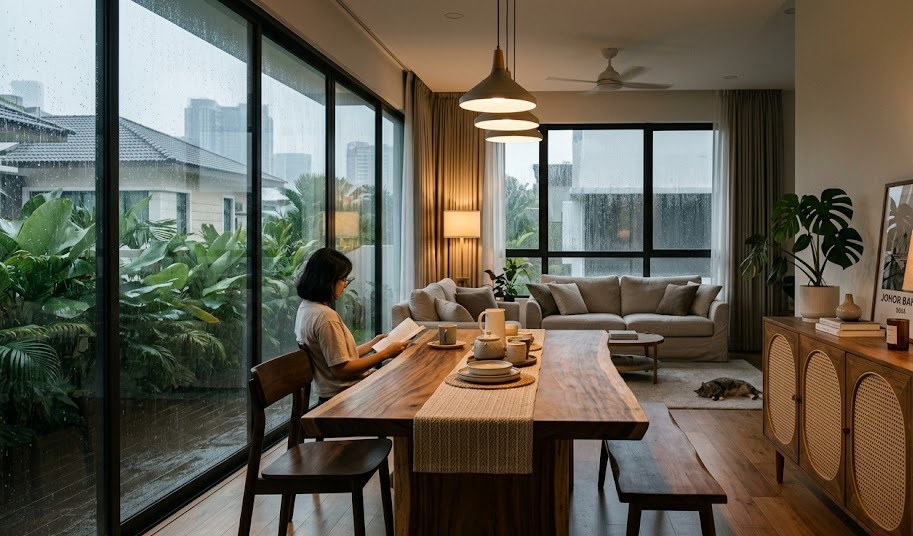
To make an informed purchasing decision that survives the Malaysian climate, we must look closely at how different wood species behave. In this comprehensive guide, we will evaluate four highly popular furniture woods: Pine, Kikar, Mindi, and Acacia. Understanding their structural characteristics, density, and natural moisture resistance will ensure your furniture remains beautiful, functional, and durable for generations.
The Science of Wood vs. Tropical Humidity
To understand why certain woods warp while others remain stable, we must examine the concept of Equilibrium Moisture Content (EMC). Wood contains both “free water” within its cell cavities and “bound water” within its cell walls. As wood seasons and dries, it loses free water first, followed by bound water, until its moisture level matches the relative humidity and temperature of its environment.
In a stable environment, this process poses little risk. However, Johor’s climate is characterized by significant shifts. During the day, non-air-conditioned homes may experience high heat and moderate humidity; at night, the air cools and humidity spikes. If you run air conditioning periodically, the sudden drops in temperature and moisture levels create rapid structural shifts. This fluctuating environment forces wood to expand and contract unevenly along its three anatomical directions: radial, tangential, and longitudinal. This uneven movement is what causes timber to warp, cup, or twist.
A timber’s structural stability in humid conditions depends largely on its density, cellular structure, and natural oil content. Dense hardwoods with tightly packed grain patterns restrict rapid moisture intake. Conversely, softwoods or fast-growing species with open-pore structures allow airborne moisture to enter and exit freely, increasing the risk of structural failure. Let us examine each wood species in detail to understand how they hold up under Johor’s unique climate shifts.
Pine Wood: The Porous Softwood Challenge
Pine is a soft wood characterized by its light, warm color tones, prominent knots, and relatively affordable price point. This makes it a popular choice for budget-conscious homeowners and minimalist interior designs, such as Scandinavian or rustic farmhouse aesthetics. However, when evaluating pine’s long-term performance in a tropical climate, we encounter notable challenges.
At a cellular level, pine has an open-pore structure. This low density means it absorbs moisture quickly when humidity rises and releases it rapidly when air conditioning dries the room. Because of this high rate of moisture exchange, untreated or poorly finished pine furniture is highly susceptible to swelling, warping, and cracking. If you are considering this material, understanding is pine wood good for furniture is essential for making an informed choice. In Johor’s climate, pine requires strict maintenance and high-quality protective sealants to minimize structural movement.
Pros of Pine in Malaysia:
- Affordability: Pine remains one of the most cost-effective real wood options on the market.
- Workability: Its soft nature makes it easy to cut, shape, and stain, allowing for highly customized furniture designs.
- Aesthetics: The natural light grain and distinctive knots provide a warm, organic visual appeal.
Cons of Pine in Malaysia:
- High Porosity: It reacts quickly to relative humidity shifts, presenting a constant risk of warping or bowing.
- Softness: It is prone to dents, scratches, and structural wear from everyday household use.
- Fungal Risks: The humid air creates an ideal environment for mold and mildew growth on unsealed or poorly ventilated pine furniture.
If you purchase pine furniture for your Johor home, ensure it is fully finished with an all-weather polyurethane sealer or marine varnish on all sides—including the underside and backing. This creates a protective barrier that significantly slows the rate of moisture absorption, keeping the timber stable during monsoon seasons.
Kikar Wood: The Dense, Traditional Powerhouse
Kikar wood, also known as Indian Rosewood or Acacia nilotica, is a dense hardwood traditionally valued for its exceptional strength and rich, deep grain patterns. Often used in heavy, structural furniture pieces like solid dining tables and storage chests, Kikar is naturally resistant to wear and tear. Its high density offers substantial structural stability under normal conditions.
In high-humidity environments like Johor, Kikar’s high density acts as a double-edged sword. While its tightly packed fibers slow down the rate of moisture absorption, they also generate significant internal stress when expansion does occur. If Kikar wood has not been properly kiln-dried before manufacturing, the thick timber slabs can develop deep, irreversible cracks as they struggle to adapt to tropical humidity.
Furthermore, Kikar contains moderate amounts of natural oils that help repel wood-boring pests and fungal spores, which thrive in damp climates. To ensure its longevity, look for Kikar pieces crafted with traditional joinery techniques, such as mortise and tenon joints, which naturally accommodate the timber’s subtle seasonal movements without pulling the piece apart.
Pros of Kikar in Malaysia:
- Exceptional Durability: Highly resistant to surface damage, dents, and heavy load weights.
- Insect and Rot Resistance: Natural tannins and dense fibers make it highly resilient against termites and mold.
- Stunning Grain: Features a dramatic, contrasted grain structure that adds character to any space.
Cons of Kikar in Malaysia:
- Heavy Weight: Extremely heavy and difficult to reposition within the home.
- Cracking Risk: If the timber was poorly seasoned or dried before production, it is susceptible to radical splitting when indoor conditions dry out.
Mindi Wood: The Hidden Gem of Dimensional Stability
Mindi wood, taxonomically known as Melia azedarach and often marketed as White Cedar, is increasingly favored by modern furniture artisans in Southeast Asia. This wood is appreciated for its straight, clean grain patterns, smooth texture, and ease of finishing. While it is technically classified as a medium-density hardwood, its structural performance in humid tropical climates like Johor is remarkably reliable.
The defining characteristic of mindi wood is its exceptional dimensional stability. Once seasoned and dried, the wood fibers become highly stable and resistant to warping. Mindi wood has a naturally low shrinkage and swelling coefficient compared to other utility timbers. This means that as relative humidity fluctuates between Johor’s dry afternoons and rainy monsoon nights, mindi wood expands and contracts uniformly, keeping its structural integrity intact. Additionally, mindi wood contains natural sap compounds that repel wood-boring insects, offering peace of mind to homeowners dealing with tropical pests.
Pros of Mindi Wood in Malaysia:
- High Dimensional Stability: It is highly resistant to warping, twisting, or cupping in fluctuating humidity.
- Easy to Finish: Its smooth, straight grain absorbs stains and protective clear coats exceptionally well, creating a flawless visual surface.
- Moderate Weight: It offers the density of hardwood without being excessively heavy, making it practical for daily use.
Cons of Mindi Wood in Malaysia:
- Softness Compared to Dense Hardwoods: While more durable than pine, mindi is softer than acacia or kikar, meaning it can sustain minor surface scratches if subjected to rough handling.
- Limited Raw Availability: High-grade mindi furniture is often produced in specialized facilities, making it slightly more difficult to source than mass-produced pine or rubberwood.
Acacia Wood: The Ultimate Humid-Climate Champion
Acacia is a dense, heavy hardwood widely celebrated for its robust structural properties. In Malaysia, where high relative humidity and fluctuating indoor temperatures are common, acacia stands out as an exceptional choice for durable furniture. It is characterized by high density, tight interlocking wood grains, and a rich abundance of natural oils and resins that act as a barrier against moisture and pests.
If you are exploring your options for a durable, long-term furniture investment, you might wonder: is acacia wood good for furniture when facing Johor’s challenging climate? The answer is a resounding yes. Because acacia wood is packed with natural defenses, it resists moisture absorption far better than softer alternatives. Its interlocking grain structure limits dimensional shifting, ensuring that dining tables, bed frames, and outdoor seating do not warp, split, or sag over decades of service.
Pros of Acacia Wood in Malaysia:
- High Moisture Resistance: Built-in natural oils slow the penetration of airborne humidity, protecting the timber from swelling.
- Heavy-Duty Durability: This highly scratch-resistant and dent-proof wood is ideal for high-traffic household areas.
- Natural Insect Protection: The heartwood naturally repels termites, powderpost beetles, and fungal decay.
Cons of Acacia Wood in Malaysia:
- Premium Pricing: Due to its exceptional durability and slow growth cycle, high-quality solid acacia furniture sits at a higher price point than pine or mindi.
- Complex Maintenance: Acacia requires periodic oiling or conditioning to maintain its natural luster and prevent the surface from drying out when used in air-conditioned rooms.
Evaluating Wood Types: Side-by-Side Comparison
To help you visualize how these materials compare, the table below outlines the core properties of Pine, Kikar, Mindi, and Acacia wood when subjected to Malaysia’s tropical climate conditions.
| Wood Species | Average Density (kg/m³) | Warping & Swelling Risk | Resistance to Fungi & Pests | Recommended Johor Indoor Use | Estimated Lifespan (Years) |
|---|---|---|---|---|---|
| Pine | ~450 (Softwood) | High (Very porous) | Low (Requires treating) | Air-conditioned, low-moisture areas | 5 – 10 (With proper care) |
| Kikar | ~780 (Hardwood) | Moderate to High (Needs kiln-drying) | High (Naturally durable) | Heavy living room and storage units | 15 – 25+ |
| Mindi | ~550 (Medium Hardwood) | Low (Highly stable) | Moderate to High | Dining sets, cabinets, and shelving | 15 – 20 |
| Acacia | ~750 (Hardwood) | Very Low (Interlocking grain) | Excellent (High natural oil content) | Dining tables, high-traffic spaces, patios | 30+ (Extremely long-lasting) |
Practical Maintenance Tips for Johor’s Seasonal Climate
Choosing the right wood species is only the first step. To ensure your investment stands the test of time, you must adopt a tailored care routine that mitigates the impacts of Johor’s seasonal humidity shifts. Here are three critical strategies for preserving the beauty and structural integrity of your solid wood furniture:
1. Manage Indoor Airflow and Humidity Fluctuations
The transition between the wet Northeast Monsoon and the hotter, drier months can place sudden stress on solid wood. To minimize this:
- Avoid placing high-quality wood furniture directly in the path of continuous air conditioning vents, which can strip wood of its natural moisture and cause drying cracks.
- If you use air conditioning heavily, consider introducing a small humidifier or placing indoor plants nearby to help maintain stable ambient moisture levels.
- Keep furniture away from areas exposed to direct rain or mist from open windows, especially during seasonal monsoon storms.
2. Maintain a Proper Finish and Seal
A high-quality protective barrier is your furniture’s primary defense against the tropical elements. Over time, original factory finishes can wear down, exposing raw wood fibers to moisture:
- Inspect your furniture annually for thin or worn spots in the protective topcoat.
- For oiled finishes (common with Acacia and Kikar), apply a high-quality beeswax or furniture oil every six to twelve months. This replenishes the wood’s natural defenses and prevents cracking.
- For varnished or polyurethane-finished pieces, dust regularly with a soft, dry microfibre cloth, avoiding harsh chemical cleaners that can degrade the protective layer.
3. Prevent Direct Sunlight Exposure
While moisture is a significant challenge, extreme heat and UV exposure from direct Malaysian sunlight will accelerate surface drying, leading to fading, uneven coloration, and micro-cracking along the wood grain:
- Place your solid wood dining tables and sideboards away from sliding glass doors or unshaded windows.
- Use sheer curtains or UV-filtering window films to diffuse harsh daylight, keeping the wood at a stable temperature and preventing premature aging.
Making Your Decision: Selecting the Perfect Piece
Investing in solid wood furniture is about balancing budget, aesthetics, and long-term durability. While softwoods like pine offer an attractive, budget-friendly entry point, they demand diligent maintenance and protective coatings to withstand Johor’s high humidity. On the other hand, heavy hardwoods like Kikar and Acacia, alongside highly stable mediums like Mindi, offer superior natural resistance to warping, swelling, and insect damage, making them the most practical choices for tropical homes.
Before purchasing any solid wood item, always inquire about the manufacturing process. Ensure that the raw timber was properly kiln-dried to an optimal moisture level suitable for Southeast Asian homes. This seasoning process is the foundation of durable furniture production, minimizing structural movement before the piece even enters your home.
If you are looking to elevate your living spaces with furniture designed to withstand the test of time, we invite you to browse our online furniture shop. Explore our curated selection of high-quality, moisture-resistant solid wood pieces crafted specifically to bring lasting comfort, warmth, and enduring beauty to your home.