The 2026 JB Property Gold Rush & The Dual-Key Micro-Apartment Dilemma
As mid-2026 unfolds across Johor Bahru, a major shift is occurring in the regional real estate landscape. High-density residential developments in Tanjung Puteri, Danga Bay, and Johor Bahru Sentral—most notably massive projects like R&F Princess Cove, Tropicana Danga Bay, and Country Garden Danga Bay—are completing their final handovers. This localized property boom is fueled by a singular, looming milestone: the highly anticipated launch of the Rapid Transit System (RTS) Link in January 2027. Landlords and property investors are caught in a time-sensitive scramble to prepare their units for a waves of high-earning, Singapore-commuting professionals seeking premium, convenient living spaces directly across the border.
To capitalize on this demographic, property developers have heavily pushed the “Dual-Key” condominium configuration. These layouts consist of a main primary apartment paired with an entirely self-contained sub-unit, typically structured as a compact studio measuring between 350 and 500 square feet. On paper, dual-key properties represent an exceptional investment vehicle, allowing landlords to maximize rental yields by securing two separate tenancies under a single title, or by living in the main unit while leasing out the self-contained studio. However, translating this theoretical yield into actualized profit presents a significant spatial design challenge.
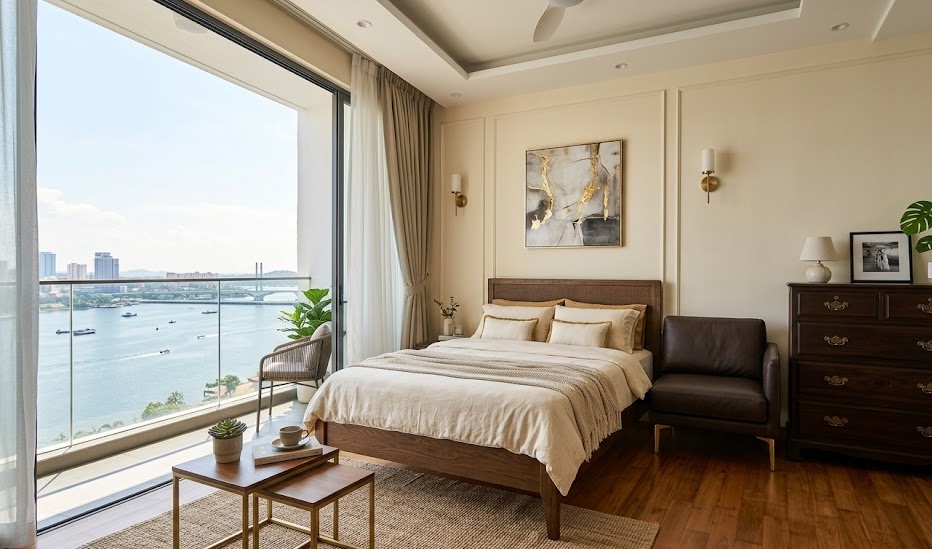
The core problem lies in the physical constraints of these micro-apartment sub-units. Landlords routinely struggle to furnish a 350-square-foot studio with all the essential requirements of a modern home—sleeping quarters, storage, working spaces, and a lounge zone—without turning the apartment into a cramped, unlivable obstacle course. When a space feels claustrophobic, its marketability plummets, leading to prolonged vacancy rates and forced rental price reductions. Conversely, buying cheap, low-end flatpack furniture to save money often leads to rapid deterioration in Johor’s humid environment, hurting long-term return on investment.
The solution requires a highly scientific, space-saving approach to interior configuration. By selecting high-quality used furniture that prioritizes specific, smart dimensions, landlords can elevate these micro-spaces to feel spacious and premium. Sourcing structurally superior, pre-owned solid wood furniture not only keeps capital expenditure low, but also ensures the durability required to withstand high tenant turnover. This guide breaks down the precise dimensions, layout physics, and furniture strategies needed to unlock maximum rental yields ahead of the 2027 RTS Link opening.
The Physics of Micro-Living: Exact Layout & Dimension Blueprints for Studios
Furnishing a micro-apartment requires strict adherence to spatial clearances and the physics of human movement. In architectural design, every furniture piece placed in a room directly impacts the surrounding “circulation corridors”—the pathways required for a person to walk comfortably without adjusting their posture. In a standard 350-to-450-square-foot dual-key studio, ignoring these corridors results in immediate layout failure, making the space feel instantly cheapened and physically uncomfortable for potential renters.
The first rule of micro-layout engineering is the preservation of secondary walkway clearances. Major egress paths—such as the pathway leading from the entryway to the bathroom or the balcony—must maintain a minimum clearance of 75 centimeters (cm) in width. Secondary pathways, such as the space between the edge of a bed and an adjacent wall, can be compressed, but must never drop below 60 cm. Dropping below these absolute thresholds forces occupants to walk sideways, creating a psychological sense of confinement that diminishes the perceived premium value of the unit.
Beyond physical pathways, landlords must account for operational clearances. This refers to the space required to fully open wardrobe doors, pull out dresser drawers, and slide out dining chairs. A standard swinging wardrobe door requires a clear arc of 50 cm to 60 cm of unobstructed space in front of it to function. If a bed frame is positioned too close, the wardrobe doors cannot fully open, rendering storage inaccessible and frustrating tenants. This is why layout planning must be calculated in cubic volume rather than simple square footage, keeping sightlines open from the entryway to the primary natural light source, which is typically the balcony window.
Pillar Strategy 1: Smart Bed Frames & Mattress Selection to Save Footprint
The bed is invariably the single largest consumer of square footage in any micro-apartment. In standard residential setups, landlords often prioritize visual grandeur, selecting thick, overstuffed headboards, wide sleigh frames, or expansive wingback beds. In a dual-key studio, this design choice is a spatial disaster. A standard queen-size mattress requires a footprint of 152 cm by 191 cm. When paired with a bulky, decorative frame, those dimensions can easily swell to 170 cm by 215 cm, devouring critical circulation space and blocking doors.
To maximize efficiency, landlords must look for streamlined, low-profile Bed Frames. Platform bed frames are highly recommended because their exterior frame measurements align almost exactly with the dimensions of the mattress itself. Choosing a frame with a slim, recessed, or entirely omitted headboard can reclaim up to 20 cm of valuable length, which can mean the difference between a functional 70 cm walkway and a cramped, unusable bottleneck at the foot of the bed. Additionally, platform beds elevated on slim, sturdy legs create a continuous visual floor plane, allowing light to flow underneath and making the room feel larger than its physical measurements suggest.
While the frame must be lean and space-saving, the comfort of the sleeping surface cannot be compromised. Singapore-bound professionals face intense daily routines, making high-quality sleep a major priority. Cheap, thin foam options will lead to negative tenant feedback and rapid turnover. Landlords should invest in premium, high-density pocket-spring or orthopedic Mattresses that offer restorative sleep. Sourcing premium, gently used mattresses from verified retailers is an excellent way to provide high-end, hospitality-grade comfort without the steep retail price tag.
The structural integrity of the bed frame is highly vulnerable to Johor’s intense coastal climate, where relative humidity levels regularly average between 80% and 90%. Cheap, engineered wood frames (such as MDF or low-grade particleboard) absorb moisture from the humid air, causing them to swell, lose structural density, and develop persistent squeaks or structural wobbles at key joint connections. To prevent this, smart landlords rely on solid timber options. Understanding the resilience of local hardwoods and analyzing Malaysian Wood Durability reveals that tropical hardwoods like Rubberwood, Acacia, and Nyatoh excel in humid conditions, maintaining tight joints and rigid stability even under heavy, continuous rental usage.
Pillar Strategy 2: Chest of Drawers as the Ultimate Vertical Space Saver
Storage is the primary paint-point for renters living in small spaces. The conventional response is to install a massive, floor-to-ceiling wardrobe with standard swinging doors. However, these monolithic structures present two distinct problems: they completely block natural light from circulating deeper into the unit, and their swing clearances require a substantial amount of empty floor space in front of them to remain functional. In a narrow dual-key layout, a swinging wardrobe door can easily collide with the side of the bed or block the main entryway corridor whenever it is opened.
The solution lies in shifting storage planning from a horizontal orientation to a vertical one. A high-quality, pre-owned solid wood Chest of Drawers is a highly effective, space-saving tool for micro-apartments. By utilizing vertical height, a five- or six-drawer chest offers substantial storage capacity for folded clothing, linens, and personal items while occupying a fraction of the floor space required by a wardrobe. Furthermore, because a chest of drawers is waist- or chest-high, it keeps the upper half of the room open, allowing natural light from the balcony to illuminate the entire studio unobstructed.
In addition to storage, the flat top surface of a solid timber chest of drawers serves multiple functions, acting as an entertainment console for a wall-mounted flat-screen television, a charging station, or a vanity area. This multi-functional utility is essential for small layouts, allowing landlords to combine two or three separate furniture pieces into a single footprint. To highlight this spatial advantage, the table below compares a traditional swinging wardrobe with a vertical chest of drawers across key practical design metrics.
| Storage Unit Type | Average Footprint Size | Swing/Drawer Clearance Required | Visual Weight & Light Blockage | Multi-Functional Top Surface | Air Circulation & Moisture Control |
|---|---|---|---|---|---|
| Traditional 2-Door Wardrobe | 120 cm W x 60 cm D (0.72 m²) | 60 cm swing arc (High clearance needed) | High; blocks light and dominates sightlines | No (Too high to utilize productively) | Poor; traps stagnant, humid air in corners |
| Sliding 2-Door Wardrobe | 150 cm W x 65 cm D (0.98 m²) | 0 cm (Slides laterally, low clearance) | High; creates a solid visual wall in small rooms | No | Moderate; less corner ventilation |
| Vertical Chest of Drawers (5-Drawer) | 80 cm W x 45 cm D (0.36 m²) | 40 cm drawer pull-out (Low clearance) | Low; keeps upper room open and light-filled | Yes (Acts as TV console, vanity, or shelf) | Excellent; allows cross-breeze ventilation |
Pillar Strategy 3: Selecting Low-Profile Sofas and Smart Seating for the Living Zone
The lounge or living zone within a dual-key studio represents the spatial focal point of the unit. It is the area that immediately greets a prospective tenant upon entering, and its arrangement heavily influences their psychological perception of the apartment’s volume. A common mistake made by inexperienced property investors is attempting to replicate a suburban living room layout within a micro-apartment. Placing a bulky, deep-seated three-seater sofa or a heavy sectional in a space under 400 square feet immediately cuts off visual pathways, blockades circulation corridors, and makes the unit feel cluttered and uncomfortable.
To avoid this, smart layout design requires the deployment of low-profile, highly tailored Sofas & Armchairs. When selecting seating for micro-spaces, landlords must pay close attention to three specific geometric dimensions: backrest height, seating depth, and floor clearance. Choosing a sofa with a low backrest—ideally under 85 cm—keeps the mid-level sightlines of the room clear, allowing the eye to travel over the furniture directly to the window, which preserves the feeling of openness. The depth of the sofa should be kept to a maximum of 80 cm, compared to the standard 95 cm or 100 cm of suburban sofas, reclaiming crucial centimeters of floor space for walkways. Most importantly, selecting seating with raised, slender legs (ideally showing 15 cm or more of clearance above the floor) is a critical design hack. Showing more floor surface under the seating tricks the human brain into perceiving a larger physical footprint, making the entire living area feel more expansive.
In addition to geometry, material selection plays a massive role in the longevity and appeal of micro-apartment seating. Johor Bahru’s tropical climate, characterized by high temperatures and coastal humidity, presents distinct challenges. Fabric-upholstered sofas easily trap airborne moisture, sweat, and environmental dust, leading to mold growth, persistent musty smells, and fabric degradation. High-grade leather, on the other hand, is highly durable, easy to clean, and naturally resistant to odor absorption, making it highly suitable for rental properties with high tenant turnover. However, because leather is organic, landlords must maintain proper sanitation and pest control protocols. High-density residential buildings in areas like Tanjung Puteri can occasionally experience pest issues from neighboring units. Landlords can protect their investment by studying Leather Furniture Pest Control, which offers detailed, practical steps to prevent flea infestations, maintain leather surfaces, and ensure a clean, pest-free environment for high-paying tenants.
Color Theory & Aesthetic Cohesion: Visual Expansiveness in JB Condos
The visual success of a small dual-key studio relies heavily on cohesive color theory and strategic material matching. Many landlords default to a sterile, entirely white or light grey color palette, believing it is the only way to make a small room feel spacious. While light colors do reflect light effectively, an entirely white room can feel cold, institutional, and devoid of character, failing to attract high-paying Singapore-bound professionals who expect premium, stylish interiors. The challenge lies in introducing deep, rich colors and luxurious wood finishes without making the micro-living space feel dark, gloomy, or visually claustrophobic.
The key to balancing richness with spatial expansiveness is the smart application of contrast. Deep, elegant tones, such as espresso, charcoal, or dark mahogany, can be highly effective when matched correctly with light, warm neutrals. If you choose to feature furniture with deep, dark finishes, it is vital to balance them with soft, light-reflective wall surfaces and textiles. By analyzing Espresso Furniture Color Matching, landlords can learn how to pair dark, premium wood tones with warm creams, soft beiges, sage greens, and gold accents. This specific color balance creates a high-end, boutique-hotel aesthetic that feels cozy, luxurious, and spacious all at once, maximizing the apartment’s visual appeal during tenant viewings.
- Avoid complete sets of identical, mass-produced laminate furniture. They make a rental look cheap, generic, and uninviting.
- Instead, mix clean-lined modern pieces with a single, high-quality, pre-owned Antique & Vintage solid wood accent. A vintage coffee table, a hand-restored side chest, or a classic wooden chair adds character, telling a story that appeals directly to high-paying expat renters.
- Maximize your property’s usable footprint by treating the balcony as a functional outdoor room. Sourcing compact, premium Outdoor Furniture, such as a pair of slim bistro chairs and a small solid-timber coffee table, extends the apartment’s living area into the open air, offering a perfect spot for morning coffee overlooking the Johor Strait.
The Material Engineering of Compact Furniture: Neem vs. Gmelina Wood
The extreme coastal humidity of Johor Bahru—regularly fluctuating between 75% and 95%—acts as an aggressive destructor of low-quality furniture. Mass-market furniture made from engineered wood products, such as Medium-Density Fiberboard (MDF), particleboard, or cheap plywood laminates, relies on chemical resins and glue-bonded wood fibers. When exposed to humid sea air, these engineered materials act like sponges, absorbing water vapor from the atmosphere. This moisture absorption causes rapid “hygroscopic expansion,” leading to swollen edges, bubbling laminates, sagging shelves, and the structural failure of critical joinery and screw connections. For property owners, relying on these cheap materials results in a frustrating cycle of frequent replacements and negative tenant reviews.
To avoid these ongoing maintenance costs, landlords must turn to the superior structural performance of premium solid tropical hardwoods. Two specific timber species stand out for their exceptional mechanical properties in small-space furniture: Neem and Gmelina. Neem wood is highly prized for its incredible density and its natural chemical makeup, which makes it highly resistant to insect attack and fungal decay. Studying the unique properties of Neem Wood Benefits reveals that its natural oils act as a powerful defense against termites, wood-boring beetles, and mold, making it an incredibly durable choice for heavy-duty rental use in humid coastal zones.
For modular, space-saving furniture that needs to be moved or reconfigured easily, Gmelina wood offers an ideal alternative. Unlike heavy, dense hardwoods that can be cumbersome to rearrange, Gmelina is lightweight yet remarkably strong and structurally stable. An analysis of Gmelina Wood Quality shows that this timber exhibits incredibly low shrinkage and swelling coefficients, meaning it will not warp, twist, or split when exposed to the cycling temperatures and high humidity of Johor Bahru. Sourcing compact used furniture crafted from these superior timber species ensures that your dual-key property remains in premium, rent-ready condition for years to come.
Dual-Key Studio Furnishing Budget Strategy: Premium Used vs. Cheap Flatpack
To successfully optimize a dual-key investment property, landlords must look closely at their capital expenditure (CapEx) relative to long-term maintenance costs and tenant appeal. Many landlords fall into the trap of purchasing brand-new, low-end flatpack furniture from mass-retailers, assuming that “newness” is what matters most to renters. However, this strategy often backfires in the high-end rental market of Johor Bahru. Renters, especially those commuting daily to Singapore via the RTS Link, are highly discerning and can easily spot cheap, fragile laminate furniture, which can negatively impact the perceived value of your property and lower your rental yields.
A far more effective financial strategy is to invest in Grade-A, premium used solid wood furniture. Sourcing high-quality, pre-inspected pre-owned furniture allows landlords to obtain premium, commercial-grade materials—such as solid teak, mahogany, and tropical hardwoods—for a fraction of their original retail price. This strategy reduces your initial setup cost while ensuring your unit is furnished with highly durable, wear-resistant pieces that stand up to years of rental use. Below is a detailed budget and performance comparison showing how high-quality used solid wood furniture outperforms cheap flatpack alternatives over a five-year investment horizon.
| Investment & Performance Metric | Grade-A Premium Used Solid Wood | Cheap Brand-New Flatpack Laminate |
|---|---|---|
| Initial Capital Outlay (CapEx) | Low to Moderate (Typically 50% to 70% off original retail price) | Low (Attractive upfront pricing but high replacement rates) |
| Lifespan Under Humid Coastal Conditions | 15+ Years (Natural timbers easily resist moisture and rot) | 1.5 to 3 Years (Glues degrade, causing swelling and cracking) |
| Structural Integrity Under Tenant Use | High (Strong joinery and dense fibers handle daily wear) | Low (Joints loosen, screws strip, and materials sag easily) |
| Tenant Appeal & Aesthetic Value | Premium (Rich wood grains look elegant and feel luxurious) | Basic (Generic, institutional look that lacks character) |
| 5-Year Replacement & Repair Cost | Near RM 0 (Requires only occasional polishing or wiping down) | High (Often requires 2 full replacements within 5 years) |
| Long-Term Rental Yield Contribution | High (Command premium rents from professional expat tenants) | Low to Moderate (Fails to stand out, forcing lower rental prices) |
Dual-Key Furnishing FAQs: Landlord Inquiries in 2026
How do RTS Link commuters’ expectations differ from standard local renters in JB?
Singapore-commuting professionals face highly demanding daily schedules. Because they spend significant time commuting and working, they highly value their downtime and expect their homes to be hassle-free sanctuaries of comfort. When evaluating a rental unit, they prioritize three key elements: a high-comfort, hospitality-grade bed setup for quality rest, functional and highly organized vertical storage to keep clutter at bay, and an open, uncluttered floor plan that is easy to keep clean and tidy. Furnishing your unit with sturdy, premium-quality materials that look elegant and feel comfortable will make your dual-key property stand out to these high-value tenants, allowing you to secure premium rental rates and minimize vacancy times.
How can I prevent mold and wood rot in small, closed-up dual-key units?
In micro-apartments, where space is limited and ventilation can easily be restricted, moisture control is absolutely critical. To prevent mold and wood rot, landlords should choose elevated furniture on raised legs, which allows air to circulate freely beneath seating, beds, and chests of drawers. Avoid placing large furniture pieces flush against outer concrete walls, as temperature differences can cause moisture to condense in those tight gaps. Sourcing furniture made from naturally moisture-resistant solid timbers, such as Neem, Gmelina, or high-durability tropical hardwoods, is a highly effective way to prevent rot and mold growth. Additionally, recommending that tenants use the dry mode on their air conditioning units or placing compact, refillable dehumidifier packs in storage areas can help keep moisture levels low.
Should I furnish the “owner-occupier” suite differently from the rental studio suite?
Yes. If you plan to live in the main apartment of your dual-key property while leasing out the sub-unit studio, you should approach the design of each space differently. For the owner-occupied suite, you can focus on personal style, custom storage solutions, and larger, character-filled pieces. For the rental studio, however, the focus should be on space-saving efficiency, highly durable materials, and smart layout design. Utilizing a clean, universally appealing aesthetic, incorporating multi-functional furniture, and keeping walkways clear will maximize the rental appeal of the studio, helping you secure reliable tenants and high rental yields without compromising your own comfort.
What are the exact dimensions of a “cramped” sofa versus an “ideal micro-living” sofa?
A typical “cramped” sofa is a standard three-seater or bulky sectional with deep seats and thick armrests. These pieces usually measure over 220 cm in length, 95 cm to 105 cm in depth, and have backrests that sit high above the floor, completely blocking natural light and traffic flow in a small room. In contrast, an “ideal micro-living” sofa is a streamlined two-seater or a compact, armless loveseat. Its dimensions should ideally be kept under 160 cm in length, with a shallow seat depth of 75 cm to 80 cm, and elevated on legs that provide at least 15 cm of clear space above the floor. This compact profile preserves valuable floor space, maintains clear pathways, and keeps the room looking light, open, and spacious.
Conclusion: Unlocking 8%+ Rental Yields Ahead of 2027
The upcoming launch of the Rapid Transit System (RTS) Link in January 2027 represents a major, game-changing opportunity for property investors in Johor Bahru. With handovers of dual-key condominiums reaching their peak in 2026, the landlords who act quickly to optimize their properties will be the ones who secure the highest rental yields. Successfully navigating this competitive market requires a thoughtful, space-saving approach to interior design. By rejecting cheap, fragile engineered wood furniture and focusing on smart dimensions, high-quality materials, and efficient vertical storage, you can transform a compact 350-square-foot studio into a highly appealing, luxury micro-apartment.
Sourcing Grade-A premium used furniture is the ultimate investment hack for smart landlords. It allows you to obtain gorgeous, durable, solid tropical hardwood furniture at a fraction of retail prices, keeping your initial setup costs low while providing a high-end look that commands premium rents. Do not wait for the RTS Link to open and trigger a rush on design services. Take action today to prepare your investment for maximum return.
Explore our carefully curated collection of pre-inspected, sustainable solid wood furniture at our Main Shop, or visit the QQ Furniture Homepage to find the ideal space-saving beds, vertical chests of drawers, and low-profile seating that will elevate your Johor Bahru dual-key condo and unlock exceptional rental yields.