The Great Johor Bahru Property Pivot: Navigating Subsale Renovations in 2026
The mid-2026 property landscape in Johor Bahru has reached a fascinating inflection point. Driven by the completion and operational testing phases of the Johor Bahru–Singapore Rapid Transit System (RTS) Link, developers launching new-build condominiums along the waterfront and central business districts have pushed asking prices to historic highs. For many young Malaysian families, couples, and local property investors, a compact 700-square-foot high-rise unit at premium price points presents a challenging value proposition. Consequently, a massive structural pivot is underway. Buyers are increasingly turning their attention to the subsale market, acquiring older, more spacious double-storey terrace houses in mature, established residential estates such as Taman Molek, Johor Jaya, and Skudai.
While these subsale landed homes offer generous square footage, private compound space, and established community amenities, they come with a distinct financial trade-off. Properties built ten, twenty, or thirty years ago require immediate, extensive structural intervention before they are habitable. Buyers face inevitable and substantial capital outlays on critical infrastructure: complete electrical rewiring to meet modern safety standards, comprehensive copper repiping to replace corroded galvanized steel lines, structural roof repairs to prevent tropical monsoon leaks, and ground-level damp-proof course installations. By the time these non-negotiable architectural overhauls are finalized, the interior design and furnishing budget is almost entirely exhausted. This creates a critical design dilemma: how do you furnish a spacious, newly renovated landed home to look elegant and cohesive without falling back on low-grade, short-lived furniture options?
The Design Fusion: Achieving Japandi and Modern Classic with Strategic Pre-Loved Sourcing
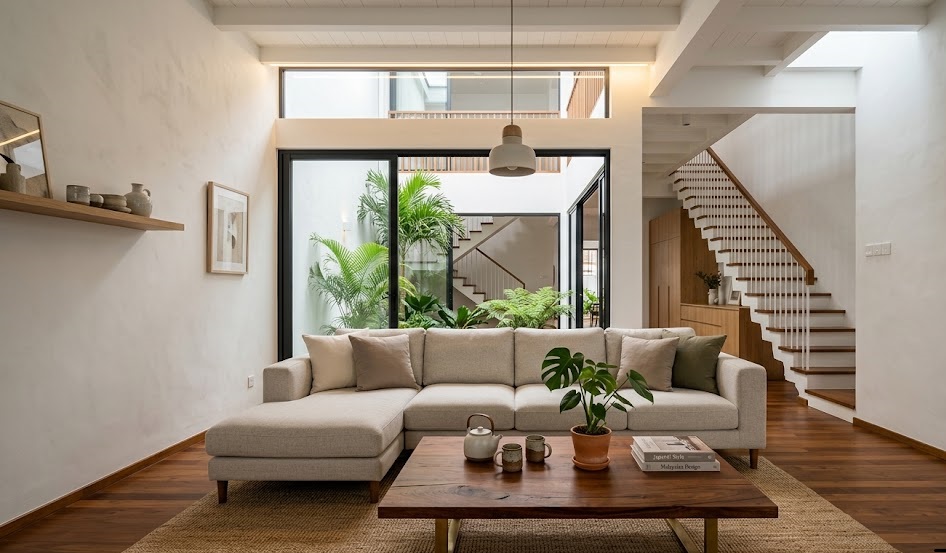
To maximize the remaining budget without compromising on aesthetic sophistication, savvy Johor Bahru homeowners are embracing design movements that naturally celebrate texture, age, and material honesty. Two dominant styles perfectly accommodate this approach: Japandi and Modern Classic. Japandi—the elegant fusion of Japanese minimalism and Scandinavian functionalism—relies heavily on clean lines, warm natural timbers, organic textures, and a clutter-free environment. Modern Classic, on the other hand, balances clean, modern architectural backdrops with bold, statement-making heirloom pieces that feature classical ornamentation, deep wood grains, and distinct profiles.
The secret to successfully executing these styles on a budget lies in a strategic mix of modern structural finishes and high-character, pre-loved wood pieces. An interior featuring newly skimmed, ultra-matte white walls, neutral microcement flooring, and minimalist light fixtures can easily feel sterile if paired exclusively with cheap, minimalist modern furniture. However, when you anchor a Japandi living room with a vintage, low-profile solid teak coffee table, or elevate a Modern Classic hallway with a beautifully restored hardwood chest, the space instantly gains warmth, historical depth, and high-end texture. By sourcing these structural timber elements from curated second-hand inventories, homeowners can bypass the high markup of premium retail showrooms while acquiring pieces with a level of character and craftsmanship that modern manufacturing rarely replicates.
The Climate Factor: Why Tropical Johor Humidity Destroys Particle Board but Validates Solid Wood
Landed terrace houses in mature estates across Skudai and Johor Jaya are highly susceptible to the microclimatic challenges of Southern Malaysia. Ground moisture, high humidity levels (often fluctuating between 70% and 95%), and seasonal monsoon patterns exert immense physical stress on indoor materials. Ground-floor living areas in landed homes absorb rising dampness directly from the concrete subfloor, a phenomenon rarely felt in high-rise apartments. This makes the choice of furniture substrate a critical factor in determining long-term financial efficiency.
Modern mass-market flat-pack furniture relies almost exclusively on veneered particle board or Medium-Density Fibreboard (MDF). These substrates are composed of compressed wood fibers held together by synthetic resins and urea-formaldehyde glues. When exposed to Johor’s ambient humidity, the porous interior of particle board acts like a sponge, drawing in moisture. Within twelve to twenty-four months, this moisture absorption leads to irreversible structural swelling, causing the outer veneer layer to delaminate and peel away. Furthermore, damp particle board becomes a prime breeding ground for toxic black mold and structural warping under load. In stark contrast, vintage solid hardwoods have already undergone decades of natural expansion and contraction, stabilizing their moisture content. Their dense cellular structures resist fiber swelling, and their natural oils act as a barrier against mold spores. Investing in solid pre-loved timbers is not merely an aesthetic preference; it is a structural necessity for tropical landed homes.
| Material Class & Type | Structural Integrity under Johor Humidity | Resistance to Subterranean Termites | Susceptibility to Sagging & Warping | Estimated Lifespan in Landed Homes | Refurbishment & Resale Value Potential |
|---|---|---|---|---|---|
| Solid Malaysian Hardwood (e.g., Shorea, Balau, Merbau) | High; tight fiber structure resists ambient moisture absorption. | Moderate to High; naturally dense resins deter boring insects. | Very Low; high natural load-bearing capacity. | 50+ Years (Heirloom grade) | Excellent; retains structural value, easily sanded and refinished. |
| Premium Neem Wood (Reclaimed / Vintage) | Excellent; dimensional stability remains high in dry or damp air. | Exceptional; natural azadirachtin compound repels termites completely. | Negligible; straight grain pattern prevents twisting. | 40+ Years | Very High; highly sought after for organic and health-conscious spaces. |
| Gmelina Wood (White Teak) | Moderate to High; lightweight with good moisture resistance. | Moderate; requires standard protective coatings. | Low; stable when properly seasoned. | 25–40 Years | Good; highly adaptable to paint or stain modifications. |
| Flat-Pack Particle Board (MDF / Melamine) | Extremely Poor; absorbs rising dampness and swells rapidly. | Non-existent; soft, glue-laden fibers are highly attractive to termites. | Extremely High; sags permanently under modest weight loads. | 2–5 Years | Zero; disintegrates during disassembly or relocation. |
The comparative chart outlines the long-term financial path of buying low-cost flat-pack options (which require replacement every 4 to 5 years due to humidity-induced failure) versus a one-time purchase of high-quality pre-loved solid wood furniture.
The Botanical Advantage: Identifying Superior Local Wood Species in the Pre-Loved Market
When navigating second-hand markets or visiting warehouse showrooms in Johor, successful buyers do not rely on surface appearances. To build a robust, beautiful interior, one must learn to identify the underlying timber species of vintage items. Because the Malaysian timber market historically manufactured high-quality domestic and commercial furniture using local species, the pre-loved market is a goldmine for premium, dense hardwoods that are physically superior to modern imports.
The first critical evaluation to make is understanding why Malaysian wood is good for furniture. Native hardwoods such as Merbau, Nyatoh, Sepetir, and Shorea (commonly known as Meranti) have cellular structures adapted specifically to resist tropical wood-boring pests and extreme fluctuations in atmospheric moisture. Unlike imported European pine or oak, which can warp or split when introduced to Malaysia’s permanent humidity, local timbers maintain remarkable dimensional stability. They feature deep, complex grain patterns that develop an elegant patina over decades of natural oxidation, making them the structural centerpiece of any Japandi or Modern Classic layout.
For landed terrace houses in mature estates like Johor Jaya and Skudai, subterranean termites represent a persistent, costly threat. This makes the search for vintage neem furniture highly strategic. Understanding why Neem wood is good for furniture lies in its chemical composition. Neem wood naturally contains azadirachtin, a biological organic compound that acts as a powerful repellent against termites, wood-boring beetles, and fungi. Pre-loved neem dining tables, bed frames, and structural chests represent an incredibly durable choice for ground-floor spaces. It has a interlocking grain and reddish-brown coloration that mimics mahogany, which fits beautifully into a sophisticated Modern Classic dining room or library.
For spaces where heavy hardwood is less practical—such as modular shelving units, suspended console tables, or accent chairs that need to be easily rearranged—buyers should look for white teak or Gmelina. Exploring why Gmelina wood is good for furniture reveals a lightweight yet remarkably robust timber. Gmelina wood has a naturally high natural oil content that resists decay, and its light, creamy-yellow to pale brown tone makes it a premier canvas for the clean, minimalist timber finishes demanded by the Japandi aesthetic. Pre-loved Gmelina sideboards and coffee tables can be easily sanded down and finished with a clear matte oil, showcasing their clean grain patterns without the dark, heavy varnishes of past decades.
Smart Budget Allocation: Where to Spend Premium vs. Where to Source Pre-Loved
In a comprehensive subsale property flip, managing capital distribution is an exercise in prioritizing high-impact investments over low-yield expenditures. Homeowners frequently make the mistake of distributing their furniture budget evenly across all rooms, resulting in a compromised selection of low-tier, brand-new pieces that fail rapidly in Johor’s climate. The professional strategy requires a strict bifurcation: allocate capital to personal hygiene, orthopedic support, and heavy-use utility items first, while sourcing high-character, high-durability items from the pre-loved market.
The bedroom is the most critical area for this structured capital allocation. It is highly recommended to purchase brand-new, premium, medically rated mattresses. Because mattresses absorb body heat, oils, and perspiration directly, buying a pristine, structurally uncompromised sleeping surface is essential for both health and long-term comfort. However, there is absolutely no need to pair that premium mattress with an expensive retail bed frame. Modern retail bed frames, often constructed from fabric-wrapped particle board or thin metal tubes, are prone to creaking, sagging, and mold accumulation behind the headboard. Instead, you can achieve incredible cost savings and structural stability by sourcing vintage, solid hardwood bed frames from a trusted second-hand inventory. A vintage solid teak or Nyatoh bed frame can be sanitized, polished, and integrated into a Japandi bedroom, providing an indestructible foundation for a fraction of the retail cost.
This hybrid sourcing model relies on finding a structured, professional used furniture shop rather than relying solely on peer-to-peer online classifieds. Peer-to-peer sourcing in Johor often involves unverified storage conditions, hidden structural damage, and complicated transportation logistics. A dedicated, professional warehouse showroom inspects, cleans, and structures its inventory, allowing renovators to securely source cohesive suites of furniture. This is particularly valuable when searching for genuine antique & vintage sideboards, dining tables, and display cabinets. These pieces serve as the design anchors of a Modern Classic interior, instantly giving a renovated subsale home a sense of architectural history and curated luxury that brand-new flat-packs simply cannot deliver.
| Interior Space & Core Furniture Piece | Traditional New Retail Cost (RM) | Curated Pre-Loved Cost (RM) | Estimated Sourcing Savings | Structural Material Quality Advantage |
|---|---|---|---|---|
| Master Dining Area (6-Seater Hardwood Set) | RM 4,500 – RM 8,500 | RM 1,200 – RM 2,200 | 70% – 74% Savings | Pre-loved: Aged, seasoned solid teak/rosewood vs. New: Fast-grown plantation pine with heavy chemical sealers. |
| Living Room Focal Piece (Solid Wood Credenza/Sideboard) | RM 3,200 – RM 5,800 | RM 900 – RM 1,600 | 71% – 72% Savings | Pre-loved: Authentic mortise-and-tenon joinery vs. New: Cam-lock fasteners and thin veneer over MDF. |
| Master Bed Frame (Solid Hardwood Queen/King) | RM 2,800 – RM 5,000 | RM 750 – RM 1,400 | 72% – 73% Savings | Pre-loved: Solid dense Malaysian hardwood rails vs. New: Laminated particle board panels prone to joint splitting. |
| Foyer Entryway (Solid Wood Chest of Drawers) | RM 1,800 – RM 3,200 | RM 450 – RM 850 | 73% – 75% Savings | Pre-loved: Solid timber drawer boxes with dovetail joints vs. New: Stapled drawer runners and plastic tracks. |
Pest Control and Hygiene Protocols for Johor Landed Homes
One of the most common concerns for homeowners considering pre-loved furniture is the potential introduction of pests into a freshly renovated home. Landed terrace houses in Johor, because of their proximity to soil, gardens, and older drainage networks, are already vulnerable to external biological threats like termites and ants. Introducing second-hand furniture without a proper inspection and sanitization protocol is a risk that can easily be avoided with a systematic approach.
The first critical step is understanding where pests actually live. For example, buyers often ask: can fleas live in leather furniture? The biological reality is that while adult fleas and bedbugs cannot burrow directly into non-porous, genuine leather hide, they can easily seek refuge in the small crevices of the frame. Pests, along with their eggs and larvae, frequently hide in the underlying timber frame, the deep seams of the upholstery, the cambric dust covers stapled to the underside, or the interior dacron filling. Therefore, any pre-loved sofas & armchairs must undergo a thorough multi-point inspection before they cross the threshold of your home.
To guarantee complete hygiene, follow this professional sanitization protocol for any upholstered or leather second-hand furniture:
- Structural Extraction & Vacuuming: Strip away the bottom cambric dust cover. Use a high-efficiency particulate air (HEPA) vacuum to clean all internal frame corners, joint intersections, and spring wells.
- High-Temperature Steam Treatment: Apply pressurized dry steam (minimum 100°C) to all fabric seams, frame joints, and cushion covers. Dry steam kills bacteria, mold spores, and insects on contact without soaking the internal padding.
- Diatomaceous Earth Treatment: Lightly dust food-grade diatomaceous earth into the inner wooden frame cavities. This natural, non-toxic powder dehydrates and neutralizes crawling insects over time.
- Wood Conditioning & Sealing: Wipe down all exposed wooden legs and frame components with an isopropyl alcohol solution, then treat them with natural neem oil or a microcrystalline wax finish to prevent future wood-boring pests.
Aesthetic Integration: Harmonizing Mismatched Wood Eras and Tones
When you style an interior using pre-loved furniture, you are often working with a variety of timber species, finishes, and eras. Mixing different wood tones can sometimes result in a visually chaotic space that lacks design intent. However, with a few key design principles, you can easily blend mismatched wood elements to create a highly sophisticated, unified Japandi or Modern Classic aesthetic.
The main challenge homeowners face is integrating dark, traditional wood pieces—such as vintage rosewood or deeply stained mahogany—into a bright, minimalist space. To solve this, you need to understand what color goes with espresso furniture and other dark wood finishes. To prevent a dark wood piece from making the room feel heavy, offset its visual weight with high-contrast, modern backdrops. Warm off-whites (such as alabaster or cream), soft sages, muted sand tones, and deep charcoal grays work beautifully. Placing a dark, rich vintage sideboard against an ultra-matte, warm white wall allows the intricate wood grain to stand out as a beautiful design statement. This high-contrast pairing makes the dark timber look deliberate, modern, and sculptural.
The sustainable lifecycle of curated pre-loved solid wood furniture: Sourced from mature estates, restored and sanitized, styled with modern design principles, and naturally protected against tropical humidity.
To create balance across your home, distribute different wood finishes evenly. For example, rather than placing all your dark wood furniture in one room, position a beautifully restored chest of drawers in the bedroom to ground the space, and pair it with a light, minimalist ash wood desk. In the entryway, a rich dark console table can be balanced with a light-colored woven rattan chair. This intentional mix of tones creates layers of texture that make your home feel lived-in and carefully curated over time.
Finally, do not overlook your outdoor transition spaces. Johor’s landed terrace houses often feature wet kitchens, rear washing areas, or front patios. These semi-exposed spaces require incredibly resilient materials. Sourcing high-density, pre-loved solid teak or Balau outdoor furniture is a fantastic, cost-effective solution. These high-grade timbers contain natural silica and protective resins that withstand direct sunlight and rain far better than new, low-cost plastic or composite materials, extending your high-end design aesthetic to every corner of your property.
Frequently Asked Questions: Sourcing Pre-Loved Furniture for Johor Subsale Flips
How do I check the structural integrity of pre-loved wood furniture at a warehouse?
Always inspect the joints. Gently rock the piece from side to side; any wobbling or creaking indicates that the internal dowels or mortise-and-tenon joints have loosened and will require reinforcement. Next, pull out all drawers completely. Inspect the drawer bottoms to ensure they are made of solid timber panels rather than sagged plywood, and check that the drawer glides are smooth and free of deep grooves. Finally, inspect the undersides and back panels with a flashlight to look for fine powder or tiny exit holes, which are signs of active wood-boring insect infestations.
How can I safely eliminate old odors from second-hand timber cabinets?
Older furniture can sometimes carry musty odors from decades of storage or old mothball use. To eliminate these smells, start by thoroughly vacuuming the interior. Wipe down all internal surfaces with a 1:1 solution of white vinegar and warm water, which naturally neutralizes organic compounds without damaging the wood fibers. Allow the piece to dry completely in a well-ventilated, shaded outdoor area. For persistent odors, place a bowl of active charcoal briquettes or clean baking soda inside the closed drawers for 48 hours to absorb any remaining moisture and smells.
Is it difficult to transport large second-hand furniture purchases across Johor Bahru?
Transporting large furniture across Johor Bahru is straightforward when working with a structured second-hand warehouse. Unlike peer-to-peer marketplaces where you have to arrange your own logistics, established professional shops usually provide delivery services or work with trusted local transport partners. This ensures that heavy, delicate pieces like solid wood dining tables and glass cabinets are securely packed, transported, and assembled in your home without damage.
Can I easily paint or stain pre-loved furniture to match a minimalist Japandi color palette?
Yes, solid wood is highly adaptable. To achieve a clean, minimalist Japandi look, sand down the existing dark or glossy varnish using medium-grit sandpaper (120-grit) followed by a fine sandpaper (240-grit) to expose the raw timber grain. You can then apply a clear, water-based matte polyurethane or a natural penetrating oil finish. This process preserves the natural beauty of the wood while removing outdated, high-gloss yellow or red finishes.
Strategic Conclusion: Balancing Capital Preservation and Interior Design Excellence
Flipping or renovating a subsale terrace house in Johor Bahru’s mature estates is an excellent way to secure a spacious, high-quality home in a great location. While the cost of essential structural renovations can be high, you do not have to compromise on your interior design or settle for low-quality, temporary furniture. By strategically mixing modern structural finishes with high-quality, pre-loved solid wood furniture, you can achieve a stunning Japandi or Modern Classic look on a sensible budget.
Investing in pre-loved solid Malaysian hardwoods, neem, and teak is a smart financial move that protects your home against the challenges of Johor’s tropical climate. Rather than spending your budget on brand-new, mass-produced furniture that needs constant replacement, choosing high-quality second-hand solid wood ensures your home remains beautiful and durable for years to come. To explore a curated collection of premium pre-loved solid wood furniture, visit qqfurniture.net and find the perfect, lasting pieces for your next home project.