The 2026 Forest City SFZ Boom & The Expat Relocation Reality
The activation of the Forest City Special Financial Zone (SFZ) in 2026 has catalyzed a profound economic transition in Southern Malaysia. With specialized tax incentives, zero-withholding taxes on offshore structural funds, and streamlined work visas, the four artificial islands are experiencing an unprecedented influx of global finance professionals, wealth managers, and tech nomads. Drawn by heavily discounted luxury condominiums featuring panoramic views of the Johor Straits, new residents face a distinct logistical and design challenge: rapidly converting large, light-flooded, completely unfurnished or semi-furnished spaces into sophisticated, executive-grade homes without committing to a permanent lifetime of imported capital investments.
Expats on typical 12-to-24-month corporate assignments find themselves in a complex procurement cycle. Sourcing new high-end designer furniture from traditional showrooms in Singapore or Kuala Lumpur requires extensive lead times, complex cross-border logistics across the Tuas Second Link, and prohibitive financial premiums. On the other end of the spectrum, cheap, flatpack, mass-manufactured fiberboard pieces fail to match the soaring ceiling heights and expansive glass facades of Forest City’s architecture. Worse, these low-density engineered materials degrade rapidly under the regional coastal climate, leaving the resident with sagging shelves, swollen joints, and a degraded interior aesthetic. The solution lies in a highly structured, circular design philosophy: procuring premium used furniture Johor Bahru to establish a tailored, luxurious interior that balances financial pragmatism with uncompromising material quality.
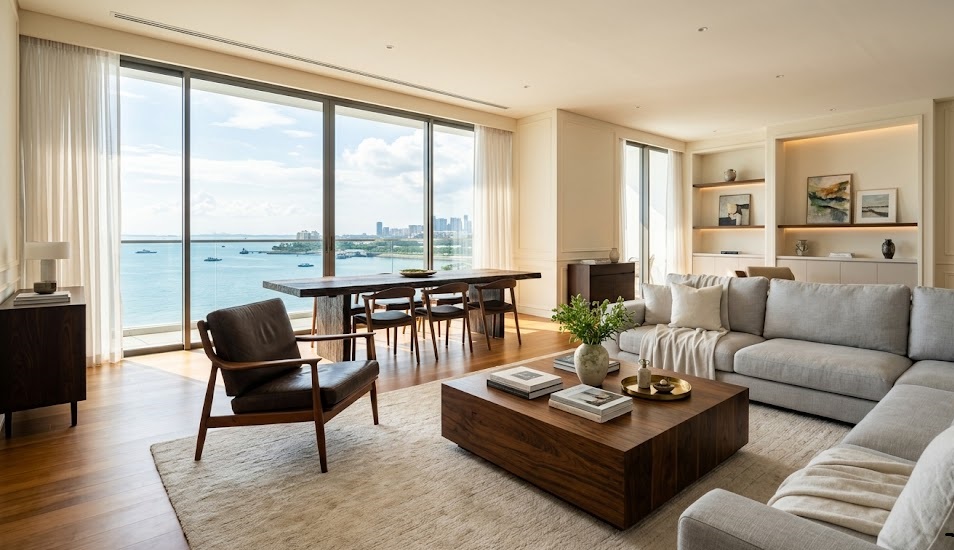
By blending robust local solid woods with curated, historically rich accents, incoming professionals can establish an elite living space that feels deeply intentional. Rather than treating furniture as a sunk relocational expense, savvy expats in 2026 view their furnishings as an asset class—pieces of high physical integrity that hold their value and can be seamlessly liquidated, repurposed, or moved when their lease concludes.
The “Luxe for Less” Philosophy: Curating High-End Aesthetics on a Temporary Budget
Designing a high-end interior on a 1-to-2-year lease requires shifting away from disposable, fast-furniture trends and adopting a curated, material-first approach. High-end interior design does not depend on everything being brand new; instead, it relies on contrast, texture, and structural weight. When a space is anchored by furniture with genuine physical mass—such as a solid timber dining table, a hand-carved credenza, or a beautifully worn full-grain leather armchair—the entire room is elevated. This allows smaller, contemporary decorative accents to blend in seamlessly, creating a space that looks highly personalized rather than pulled directly from a corporate catalog.
The financial mechanics of this approach are highly compelling. Premium showroom furniture typically depreciates by 50% to 70% the moment it is delivered. For an expat residing in Forest City for a limited duration, absorbing this depreciation is highly inefficient. Conversely, sourcing pre-owned premium furniture avoids this steep initial drop in value. High-quality solid wood and authentic vintage items have already stabilized in price. Purchasing a pre-loved solid teak table or a vintage cabinet from a reputable local purveyor means acquiring a structurally superior piece at a fraction of its replacement cost. Upon lease termination, these items can be resold back into the active Johor Bahru market, allowing expats to recoup a substantial portion of their initial setup costs. This strategy minimizes waste, avoids cross-border shipping delays, and results in a highly sophisticated interior that reflects global taste.
Selecting Local Hardwoods for Coastal Johor Humidity: Leveraging Malaysian Solid Woods
Forest City’s unique geography—constructed directly on reclaimed land surrounded by the marine environment of the Johor Straits—presents a challenging climate for interior furnishings. The combination of high ambient relative humidity (often exceeding 80% year-round), salt-laden sea air, and intense tropical UV rays through expansive floor-to-ceiling windows can quickly damage inferior materials. Engineered wood products, such as Medium-Density Fiberboard (MDF) and particleboard, act as molecular sponges. They absorb atmospheric moisture, causing the urea-formaldehyde binders to break down, which leads to warping, structural sagging, and localized mold outbreaks. To ensure a healthy, durable, and visually pristine living environment, understanding Malaysian wood durability is an absolute necessity for incoming residents.
Selecting local hardwoods that have naturally adapted to equatorial high-humidity zones ensures long-term structural stability. These timbers contain natural oils and dense interlocking grain patterns that resist moisture absorption, wood-boring insects, and localized fungal decay. For example, when evaluating bedroom or living area configurations, asking is gmelina wood good for furniture reveals a highly stable, lightweight timber that is highly resistant to warping and shrinking under fluctuating humidity. This makes Gmelina an outstanding choice for structural drawer bases, internal wardrobes, and study desks in breezy, naturally ventilated high-rises. Similarly, for heavy-use items exposed to both intense sunlight and humidity, investigating whether is neem wood good for furniture highlights its exceptional natural pest-resistance and robust density. Neem wood features natural bitter compounds that make it completely unpalatable to termites and drywood beetles—a critical consideration for Forest City properties that may remain shut up during extended corporate travel or regional financial summits.
| Timber/Material Type | Density (kg/m³) | Moisture & Humidity Resistance | Natural Insect Resistance | Forest City SFZ Application | Estimated Resale Value (2 Years) |
|---|---|---|---|---|---|
| Teak (Tectona grandis) | 650 – 750 | Exceptional (High natural oil content) | Outstanding | Balcony dining, heavy living room tables | High (80% – 90% retention) |
| Neem Wood | 720 – 840 | Very High (Dense, bitter compounds) | Immune to termites & beetles | Bed frames, main dining tables, work desks | Moderate-High (75% retention) |
| Gmelina Wood | 480 – 550 | High (Extremely low volumetric shrinkage) | Moderate (Requires proper sealing) | Shelving units, chest drawers, bedside units | Moderate (65% retention) |
| Mindi Wood (White Cedar) | 450 – 580 | Moderate-High (Excellent drying stability) | High (Naturally resinous) | Credenzas, decorative consoles, side tables | Moderate (60% – 70% retention) |
| Rubberwood (Hevea brasiliensis) | 560 – 640 | Moderate (Prone to swelling if unsealed) | Low (Requires pressure treatment) | Occasional chairs, internal structural rails | Low-Moderate (40% – 50% retention) |
| Engineered MDF / Particleboard | 600 – 800 | Extremely Low (Rapid swelling and mold) | Extremely Low (Attracts pests) | Avoid entirely in coastal environments | Negligible (Less than 10% retention) |
Combining Eras: Styling Authentic Vintage Pieces with Modern Accents
Creating a sophisticated interior that avoids looking like a generic corporate rental requires thoughtfully blending different design eras. This is particularly effective in Forest City’s ultra-modern architectural spaces, where smooth concrete, floor-to-ceiling glass, and polished ceramic tiles can sometimes feel sterile. Introducing authentic antique and vintage pieces immediately adds warmth, texture, and character. A mid-century modern teak sideboard, a colonial-era writing desk, or an ornate vintage console table breaks the monotony of clean, modern lines and serves as a natural focal point for the room.
To style these elements effectively, aim for a balanced 80/20 ratio: 80% contemporary, functional foundations and 20% high-character vintage focal points. For example, you can pair a minimalist, low-profile modern sofa with a pair of vintage armchairs featuring beautifully patinated timber frames. Sourcing premium second-hand sofas and armchairs constructed from solid local hardwoods like Meranti or Balau offers a sturdy structural foundation. These frames can be updated with fresh, neutral linens or high-performance boucle upholstery. This combination of historic timber craftsmanship and fresh, contemporary fabrics creates an upscale, curated look that feels both historic and modern. Additionally, placing a vintage wooden chest of drawers or an antique carved mirror in a modern entryway establishes a unique design identity the moment you step through the door.
Figure 1: Comparison of capital depreciation and residual value recovery over a typical 24-month lease period between low-grade fiberboard purchases and curated solid wood selections.
The Bedrock of Rest: Sourcing International-Standard Mattresses & Bed Frames
For international business professionals, financial analysts, and corporate leaders relocating to the Forest City Special Financial Zone, maintaining peak cognitive performance requires prioritizing high-quality sleep. The transition to an equatorial, maritime climate like Johor’s brings unique challenges for sleep systems. In tropical regions, sleep quality is directly impacted by humidity control, heat dissipation, and proper physical support. Many expats mistakenly assume that any standard mattress will suffice, only to find that low-quality foam mattresses trap body heat, absorb atmospheric moisture, and quickly sag, which can lead to spinal misalignment and poor sleep quality.
To avoid these issues, look for orthopedic mattress configurations that incorporate open-cell memory foams, natural pocketed latex, and high-tensile spring systems. These materials allow air to flow freely, cooling the sleep surface and preventing moisture buildup. Sourcing premium mattresses in Johor that meet international hospitality standards allows expats to enjoy excellent comfort without paying high retail markups. A high-quality mattress should be paired with structurally sound, breathable support systems. Placing a heavy premium mattress on cheap, flexible laminated slats or solid flat boards can restrict airflow and trap moisture underneath, which can lead to mold and structural degradation.
Investing in sturdy bed frames made from solid local timbers like rubberwood, mindi, or neem ensures a stable foundation. Bed frames designed with properly spaced solid wood slats (between 5 and 7 centimeters apart) allow for continuous under-mattress ventilation. This ventilation is essential in coastal high-rises where relative humidity fluctuates between day and night air-conditioning cycles. This structural setup keeps the mattress dry and hygienic, extends its usable life, and ensures restful sleep during a busy assignment.
Coastal Living Preservation: Protecting Leather & Wood from JB’s Sea Air and Tropical Pests
Living in a premium high-rise apartment in Forest City offers beautiful views of the Johor Straits, but it also exposes your home to a marine environment. Salt air carries microscopic sodium chloride crystals that can settle on furniture surfaces. On metal drawer glides, structural hinges, and decorative brass tacks, this moisture causes rapid oxidation and rust. On wood surfaces, salt crystals can draw out natural moisture, leading to fine surface cracks. To protect your furniture, wipe down exposed timber pieces every month with a soft, dry microfiber cloth and treat them with a natural beeswax compound to create a protective barrier.
Upholstery requires similar care. Full-grain and top-grain leather are popular for high-end interiors, but they can be sensitive to tropical conditions. In air-conditioned apartments, leather can dry out and crack, while in humid, naturally ventilated rooms, it can accumulate surface mildew. A common concern for expats buying pre-owned upholstered furniture is the risk of pests, such as whether fleas in leather furniture are a common issue. Fortunately, high-quality, non-porous top-grain leather is highly resistant to pests. Unlike woven fabrics, fleas and dust mites cannot burrow into solid leather, making it an exceptionally hygienic choice for coastal apartments. Regular conditioning with a pH-balanced leather cream keeps the hide supple and prevents moisture absorption, ensuring your leather furniture remains clean, comfortable, and visually impressive.
Color Theory for Forest City Expats: Matching Deep Tones with Natural Coastal Light
The luxury apartments in Forest City feature large, floor-to-ceiling glass windows designed to maximize views of the water and surrounding greenery. While this fills the rooms with natural light, it also creates high-contrast glare. Incorporating deep-toned wood furniture, such as those in dark walnut or rich espresso, adds visual weight and elegance to the space. However, without careful styling, a room filled with dark furniture can feel heavy or dated. Balancing these tones is key to creating a modern, coastal aesthetic.
When selecting accent pieces, explore colors that match espresso furniture to create a cohesive look. Neutral tones like soft cream, warm beige, sand, and light gray complement dark wood tones beautifully. For accent colors, soft sage greens, subtle eucalyptus, and muted slate blues reflect the surrounding coastal landscape. These colors can be incorporated through area rugs, linen window drapes, and decorative throw cushions. Introducing metallic accents, such as brushed brass or matte gold light fixtures, also adds warmth and balances the deep, natural tones of the wood, resulting in a balanced, sophisticated living environment.
Smart Storage & Ocean-View Balcony Living in Forest City
Optimizing vertical space is essential for maintaining a clean, professional aesthetic in high-rise apartments, especially in 1-bedroom and 2-bedroom layouts. Incorporating a solid wood chest of drawers in the bedroom or living area provides excellent storage for clothing, linens, and personal documents. Unlike cheap particleboard dressers, drawers built with solid wood runners glide smoothly even in high humidity, protecting your belongings from dust and moisture.
For many expats, the highlight of high-rise living is the spacious balcony. Designing this space effectively allows you to extend your living area outdoors. However, standard metal or plastic patio sets can quickly degrade under intense tropical monsoons and direct sea spray. Investing in high-quality balcony and outdoor furniture made from durable materials like premium synthetic wicker, powder-coated marine-grade aluminum, or solid teak is key. Teak is naturally rich in rubber and silica, making it highly resistant to rain, wind, and sun. Proper outdoor furniture ensures your balcony remains a comfortable, elegant space for relaxing or working throughout your stay.
| Apartment Zone | Essential Furniture Item | Recommended Material Specification | Sourcing Strategy | Aesthetic & Design Objective |
|---|---|---|---|---|
| Living Room | Executive Credenza / Console | Solid Mindi or Teak with brass hardware | Premium pre-owned / Vintage | Establishes a warm, sophisticated focal point; balances modern TV screens. |
| Living Room | L-Shape Sofa / Armchair | Top-grain leather or high-performance linen | Sturdy hardwood-frame pre-owned | Provides comfortable seating; premium leather is hygienic and easy to clean. |
| Dining Area | 4-6 Seater Dining Set | Solid Neem Wood or dense Malaysian Hardwood | Refurbished premium local timber | Creates a functional dining and workspace with excellent durability. |
| Master Bedroom | Orthopedic Bed & Frame | Open-cell pocketed spring & solid slatted frame | New premium mattress + pre-loved frame | Ensures excellent air circulation and comfortable, restful sleep. |
| Balcony | Bistro Table & Lounge Chairs | Solid Teak or synthetic rattan on aluminum | Weather-resistant specialty outdoor lines | Creates an inviting outdoor space for morning coffee or evening relaxation. |
Figure 2: Performance analysis over a 24-month lease period, showing how different materials withstand coastal humidity, moisture, and temperature fluctuations.
Relocating to Forest City’s Special Financial Zone requires navigating specific logistics, particularly when transporting large, heavy furniture pieces across checkpoints and island access routes. Sourcing your furniture locally simplifies this process considerably.
- Streamlined Border Customs: Sourcing directly from the local Johor Bahru market avoids the complexity, delays, and import duties associated with cross-border shipping from Singapore or other international ports.
- Full-Service Delivery and Setup: Sourcing from a professional local provider like the QQ Furniture shop ensures your items are delivered, brought up high-rise service elevators, and assembled in your home by an experienced team.
- Circular Purchase Model: Working with local suppliers allows you to arrange for the buy-back or resale of your premium furniture pieces at the end of your lease, providing a convenient exit strategy.
Frequently Asked Questions
Does pre-owned furniture carry a risk of pests in Johor?
Reputable furniture suppliers implement strict sanitization, kiln-drying, and pest-treatment processes for all pre-owned inventory. Because solid local hardwoods like Teak, Neem, and Gmelina are naturally dense and pest-resistant, they do not easily harbor common insects. Selecting high-quality, non-porous materials like top-grain leather also ensures a clean, hygienic home environment.
How can I protect solid wood furniture in an air-conditioned apartment?
To prevent solid timber from drying out or developing fine cracks due to air conditioning, avoid placing wood pieces directly in the path of cold air vents. Applying a thin coat of natural beeswax or specialized furniture oil every six months helps lock in natural moisture, keeping the timber stable and beautiful.
Is it possible to resell furniture locally at the end of a corporate lease?
Yes. High-quality solid wood furniture, authentic vintage pieces, and premium leather sofas retain their value exceptionally well. Unlike mass-produced flatpack furniture, which has little resale value, robust solid wood items can be easily resold back into Johor Bahru’s active expat and local markets when your lease ends.
Why is local Malaysian hardwood better suited for Forest City than imported softwoods?
Imported softwoods like pine and spruce are highly porous and tend to absorb moisture in tropical climates, making them prone to warping, swelling, and fungal decay. Local Malaysian hardwoods are naturally dense and resilient, having evolved to maintain their structural integrity in equatorial humidity.
Conclusion: The Smart Expat Sourcing Blueprint
Furnishing an executive apartment in the Forest City Special Financial Zone does not require a choice between expensive new imports or low-quality, temporary furniture. By adopting a curated, circular furnishing strategy, incoming professionals can design a sophisticated, comfortable home that matches the modern architecture of their apartment. Investing in solid local hardwoods, premium sleep systems, and authentic vintage accents creates a highly personalized, durable interior that stands up well to the coastal climate.
Choosing premium pre-loved items from a trusted local specialist offers an environmentally friendly, cost-effective way to furnish your home. Explore the wide range of solid woods, elegant vintage pieces, and custom styling options available at the used furniture Johor Bahru homepage to start planning your seamless transition to premium coastal living.